Culture & Arts
Culture and arts represent far more than passive consumption of entertainment or occasional museum visits. They constitute a fundamental human need for expression, connection, and meaning-making in an increasingly standardized world. Whether you’re sketching in a notebook, joining a local theater group, or committing to a daily reading practice, engaging with culture and arts reshapes how you perceive yourself and relate to others.
This comprehensive exploration examines the multifaceted landscape of cultural and artistic participation. From establishing a home creative practice to leveraging community spaces for growth, from overcoming impostor syndrome to building sustainable reading habits, we’ll navigate the practical, psychological, and social dimensions that transform cultural engagement from a luxury into a vital component of personal development.
Why Creative Expression Matters in Daily Life
The distinction between consuming and creating defines much of our relationship with culture. Passive consumption—scrolling through images, streaming content, admiring others’ work—offers temporary pleasure but rarely generates lasting satisfaction. Active creation, even at a beginner level, engages different cognitive pathways and fulfills deeper psychological needs.
Creating art in any form serves as a counterbalance to standardization. In environments where work processes are optimized, communication is templated, and even leisure follows algorithmic recommendations, personal expression becomes an act of reclaiming autonomy. The simple act of choosing a medium, making marks on paper, or arranging words into sentences reasserts individual agency in ways that resonate beyond the artwork itself.
The Beginner Mindset as an Asset
Many adults avoid creative pursuits because they compare their beginner efforts to professional standards they’ve internalized through years of exposure. This comparison trap overlooks a crucial truth: the beginner mindset offers unique advantages. Without established habits or ingrained techniques, beginners approach problems with fresh perspectives, experiment more freely, and find joy in incremental progress that experienced practitioners may no longer notice.
Overcoming the Fear of Judgment
The fear that others will critique your creative work often proves more paralyzing than actual criticism. This anticipatory anxiety stems from conflating artistic exploration with performance. Reframing creative practice as a personal laboratory rather than a stage shifts the focus from external validation to internal discovery. Most fellow practitioners are too absorbed in their own creative challenges to spend energy judging others, and those who do judge reveal more about their own insecurities than about your work’s merit.
Finding and Developing Your Creative Medium
The question “Which art form should I pursue?” paralyzes many potential creators. The reality is that choosing a medium matters less than beginning the practice itself. Cross-pollination between different creative fields often produces the most innovative work, and skills developed in one medium frequently transfer to others.
Practical Considerations for Medium Selection
When selecting where to begin your creative journey, consider these factors:
- Space constraints: A studio apartment may favor drawing, writing, or digital art over large-scale sculpture or oil painting
- Time availability: Some practices require extended uninterrupted sessions, while others accommodate brief intervals
- Initial investment: Photography or ceramics demand significant upfront costs, whereas sketching or creative writing require minimal materials
- Physical considerations: Certain mediums pose health hazards from solvents or dust that require proper ventilation and safety equipment
- Learning curve: While all arts demand practice, some offer quicker early gratification while others require substantial technical foundation
The Cost Versus Value Analysis
Expensive materials don’t automatically improve creative output, yet quality tools can meaningfully enhance the practice experience. A student-grade versus professional-grade material often differs less in pigment quality than in consistency and longevity. For beginners, mid-range materials typically offer the best balance, being superior enough to not frustrate the learning process while not representing a prohibitive investment if interests shift.
Developing a Personal Style
Authentic style emerges from consistent practice rather than conscious invention. Early in any creative journey, mimicking artists you admire serves as valuable learning. Through repetition and experimentation, your natural inclinations, limitations, and preferences gradually coalesce into recognizable patterns. Attempting to force a unique style prematurely often results in affected work, whereas allowing style to evolve organically produces more genuine expression.
The Social Dimension of Cultural Engagement
While creative practice can be solitary, culture fundamentally exists as a shared phenomenon. The communities we join, the events we attend, and the conversations we engage in shape our artistic development as profoundly as private practice hours.
Benefits of Local Participation
Local cultural events—gallery openings, poetry readings, community theater, craft circles—offer value beyond the immediate experience. They provide windows into how others solve creative problems, reveal techniques and resources you might not discover independently, and create accountability that sustains practice during motivational lulls. The person who mentions a particular material supplier or demonstrates an efficient workspace setup often provides exactly the insight needed to overcome a current obstacle.
Networking in Creative Spaces
Networking in cultural contexts differs markedly from professional networking. Rather than transactional exchanges of business cards and elevator pitches, creative networking builds gradually through repeated exposure and shared experience. Attending the same life drawing session weekly, participating in a monthly book discussion, or volunteering at a community arts organization creates natural opportunities for relationships to develop around genuine common interests.
The Risk of Over-Committing
The enthusiasm that comes with discovering a cultural community can lead to calendar overload. Saying yes to every exhibition opening, workshop, and collaborative project eventually dilutes the quality of participation and encroaches on necessary solitary practice time. Strategic selectivity—choosing events aligned with current creative goals and energy levels—proves more sustainable than exhausting attempts at cultural omnipresence.
Planning a Sustainable Event Calendar
An effective approach involves identifying a small number of anchor commitments—perhaps one weekly practice group and one monthly social event—then treating additional opportunities as optional enrichment rather than obligations. This structure provides consistency for skill development and community building while preserving flexibility for other demands on time and energy.
Creating Functional Home Practice Spaces
Professional studios offer advantages, but most creative practitioners develop their skills in adapted domestic spaces. Understanding how to optimize available space, manage materials, and establish productive routines transforms artistic aspiration into daily reality.
Working Within Spatial Constraints
Limited space demands creativity in setup and storage. Vertical organization, multi-functional furniture, and collapsible work surfaces maximize usability in small areas. A corner desk that accommodates both writing and drawing, a closet reorganized to hold art supplies, or a kitchen table covered with protective material can serve as adequate creative zones. The key lies in reducing setup friction—if accessing materials requires moving furniture and excavating closets, the practice rarely happens.
Understanding Color Theory and Lighting
Light profoundly affects both the creative process and the finished work. Natural north-facing light provides the most consistent illumination for visual arts, but not every space offers ideal windows. Quality artificial lighting—particularly full-spectrum bulbs that approximate daylight—allows for accurate color perception. The biology of light exposure also matters: cooler temperatures enhance focus for detailed work, while warmer tones create relaxed environments better suited to experimental play.
Health and Safety Considerations
Home studios lack the ventilation systems and safety infrastructure of institutional spaces. This makes awareness of material hazards essential. Oil painting solvents, spray fixatives, certain clay dusts, and resin fumes all pose respiratory risks in unventilated areas. Water-based alternatives, proper respirators, and strategic scheduling of hazardous processes during weather that permits open windows help manage these risks without abandoning desired mediums.
Tool Maintenance and Material Preservation
Quality tools justify their cost only when properly maintained. Brushes cleaned immediately after use last years; those left to harden become garbage. Blades kept sharp work efficiently and safely; dull tools require dangerous force and produce poor results. Similarly, proper artwork preservation—appropriate fixatives, acid-free storage, protection from light and humidity—ensures that the effort invested in creation isn’t lost to preventable degradation.
Deep Reading as Cultural Foundation
In discussions of arts and culture, reading sometimes receives less attention than visual or performing arts, yet it remains foundational to cultural literacy and creative development. Reading habits shape vocabulary, expose pattern and structure, and provide the conceptual raw material that fuels other creative work.
Reclaiming Attention Span
The fragmentation of attention through constant digital interruption makes sustained focus increasingly rare and valuable. Deep reading—extended engagement with complex texts—functions as both resistance to attention economy and training for the focus required in any creative practice. The capacity to remain with difficulty, follow extended arguments, and hold multiple threads of thought simultaneously transfers directly to artistic problem-solving.
Curating a Reading Life
Effective reading combines intention with openness. A completely random approach leads to aimless consumption, while rigid adherence to predetermined lists eliminates discovery and responsiveness to changing interests. A balanced strategy might involve alternating between categories—perhaps following a classic novel with contemporary nonfiction, then poetry—while remaining open to recommendations from trusted sources.
Active Reading Techniques
Reading becomes most valuable when it’s active rather than passive. This doesn’t necessarily mean formal annotation or note-taking, though those practices serve certain goals. Active reading might involve pausing to visualize scenes, questioning authorial choices, or noticing craft techniques. For creative practitioners, reading in one’s own medium with attention to technique—how a sentence creates rhythm, how a scene builds tension—provides masterclasses in craft.
Audio Versus Visual Reading
Audiobooks expand reading opportunities into time slots—commutes, exercise, household tasks—where physical reading proves impractical. However, the two modes engage different cognitive processes. Visual reading typically permits easier re-reading of complex passages and note-taking, while audio delivery showcases narrative voice and pacing. Many committed readers find value in both formats, choosing based on content type and circumstances rather than treating them as competing options.
Building Sustainable Creative Routines
Inspiration arrives unpredictably, but skill develops through consistency. The romanticized image of the artist waiting for the muse creates an appealing narrative but produces limited output. Routine provides the structure within which creativity can flourish without requiring constant willpower.
Effective creative routines balance structure with flexibility. A commitment to engage with one’s practice daily matters more than the duration of each session. Twenty focused minutes consistently outperforms sporadic three-hour sessions separated by weeks of inactivity. The routine embeds the practice into daily rhythms, reducing the decision fatigue that erodes creative energy.
Timing matters individually. Some people find creative work flows best in early morning clarity, others in late evening quiet. Experimentation reveals personal patterns, though practical constraints often determine available windows. The key lies in protecting chosen times rather than treating creative practice as the flexible component that accommodates everything else’s scheduling demands.
Supporting Local Cultural Ecosystems
Individual creative practice exists within larger cultural ecosystems. The availability of supplies, venues, instruction, and community depends on economic support for local cultural infrastructure. Choosing to purchase from local art suppliers rather than online giants, attending performances and exhibitions, and investing in classes or workshops circulates resources through the community that sustains your own practice.
This support extends beyond financial transactions. Volunteering time, sharing knowledge with beginners, or simply showing up consistently to events provides the social foundation that makes cultural communities viable. The gallery opening you attend, the poetry reading where you’re one of seven audience members, the community theater performance in a half-full house—your presence contributes to the continuation of these opportunities.
The journey into deeper engagement with culture and arts rewards participants with expanded perspective, enhanced skills, meaningful connections, and the profound satisfaction of creating rather than merely consuming. Beginning requires simply choosing one small action—selecting a book, attending a local event, acquiring a basic material—and allowing curiosity to guide the path forward. The richness available through cultural participation awaits those willing to move from spectator to participant.
How to Read Complex Literature When Your Attention Span Is Ruined?
The solution to a ruined attention span isn’t willpower, but a strategic retraining of your brain’s reading pathways. Active engagement (like annotation) and hybrid methods (audio + physical book) create powerful new neural connections for retention. Aligning your reading schedule…
Read more
Why Sculpture Is the Ultimate Antidote to Screen Fatigue?
Sculpture is more than a relaxing hobby; it’s a form of sensory recalibration that directly counters the neurological drain of screen-based work. Working with materials like clay provides physical, haptic feedback that our digital lives lack, helping to ground an…
Read more
Oil vs Acrylic: Which Medium Suits a Tiny Apartment Studio?
The right paint for a small apartment isn’t just oil or acrylic; it’s a complete system of technical choices managing space, safety, and light. Viable oil painting in confined spaces hinges on modern, solvent-free techniques and targeted air purification, not…
Read more
How to Reawaken Your Creativity After Corporate Burnout
Recovering your creativity isn’t about brainstorming or starting a new hobby; it’s about systematically destroying the “Efficiency Mindset” burned into you by corporate life. Passive consumption (like scrolling Pinterest) is not active creation and won’t reignite your innovative spark. Your…
Read more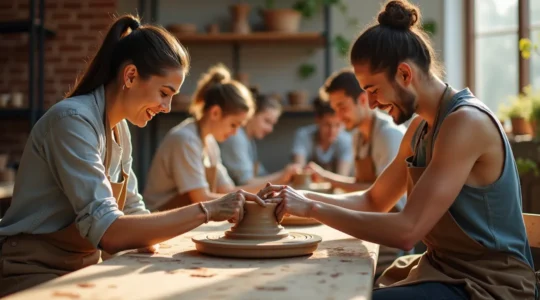
Why Local Artistic Workshops Are the Best Way to Beat Adult Loneliness
Contrary to popular belief, beating adult loneliness isn’t about forcing small talk at loud social events; it’s about finding a space for quiet, shared creation. Art workshops leverage “parallel play,” allowing you to be social without the constant pressure to…
Read more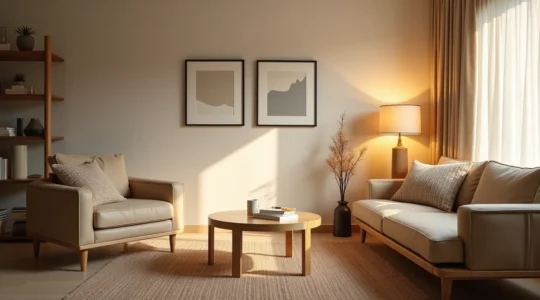
Layering Light: The Designer’s Guide to Making Small Rooms Feel Bigger
Making a small room feel bigger isn’t about adding bright lights or mirrors; it’s about strategically sculpting perception with light itself. High-CRI light reveals textures and color fidelity, creating essential visual depth that pushes walls back. Indirect lighting techniques like…
Read more
How to Find High-Value Local Events That Actually Boost Your Network
The most powerful professional connections are rarely found at traditional business mixers; they’re built organically through shared activities and genuine community participation. Volunteering is a proven strategy that builds both tangible skills and a diverse, high-value network of “weak ties.”…
Read more