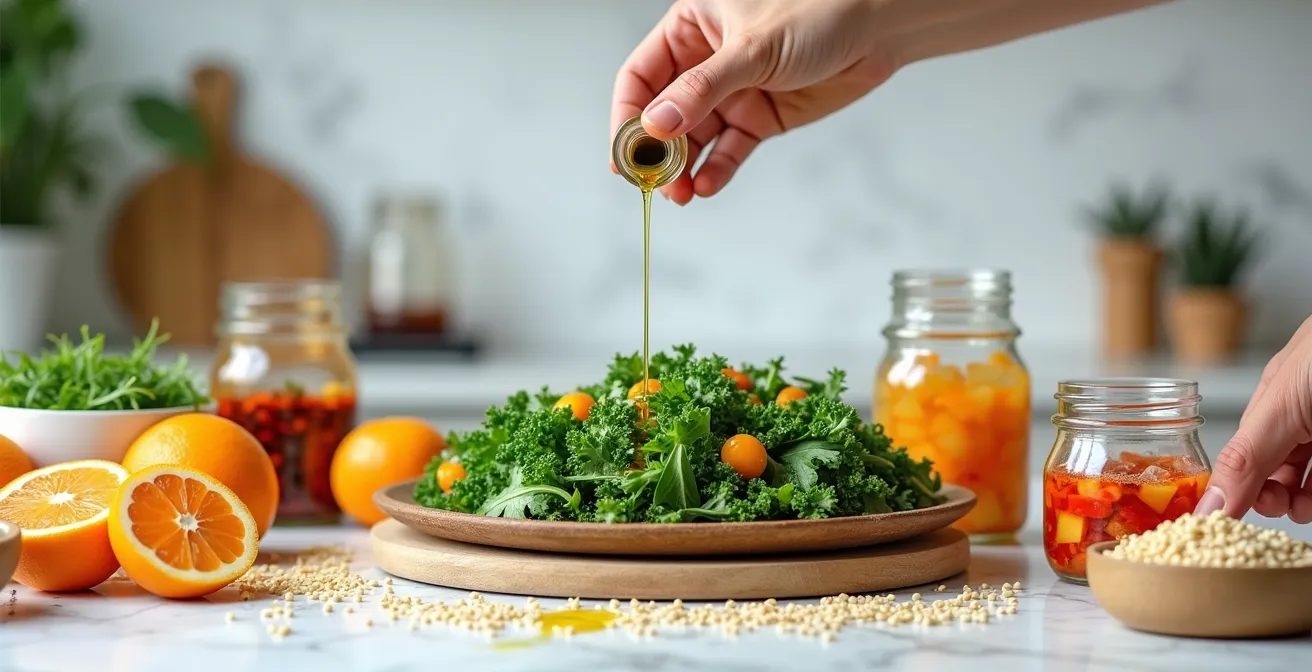
For food lovers, the world of “gut health” often seems like a joyless landscape of bland, restrictive diets. This guide flips that script entirely. The secret to a happy gut isn’t about what you eliminate, but about what you unlock. By mastering a few key culinary techniques, you can transform simple, whole foods into deeply flavorful and highly digestible meals, proving that true wellness starts in a delicious, vibrant kitchen.
If you’re a food lover who’s been told to “eat for your gut,” you’ve likely been handed a list of restrictions that reads like a eulogy for flavor. The narrative is often one of bland broths, steamed-to-death vegetables, and a sad farewell to anything delicious. It forces a choice between pleasure and health, a choice no foodie should ever have to make. This approach, focused solely on avoiding “bad” foods, misses the most exciting part of the equation: the transformative power of the kitchen.
The common advice to simply “eat more fiber” or “add fermented foods” is not wrong, but it’s incomplete. It treats ingredients as static objects to be consumed, not as dynamic elements waiting to be coaxed into their most delicious and nutritious state. The real magic isn’t just in the ingredients themselves, but in the culinary techniques we apply to them. What if the key to a healthier gut wasn’t found in restriction, but in a deeper understanding of flavor and culinary alchemy?
This is where the chef’s mindset changes everything. We will move beyond simple food lists and dive into the *how* and *why* of cooking for digestive wellness. You’ll learn how a splash of acid can unlock nutrients in leafy greens, how to build incredible sauces without inflammatory ingredients, and how stress and meal timing are as crucial as any single food. This guide is about adding joy, technique, and robust flavor back to your plate, making gut health a delicious pursuit rather than a dietary punishment.
In the sections that follow, we’ll explore the core principles that merge culinary art with digestive science. Prepare to see your kitchen not as a place of limitation, but as your personal laboratory for flavor-forward, gut-healing wellness.
Summary: How to Cook for Gut Health Without Sacrificing Flavor ?
- Why Bitter Greens Need Acid to Be Palatable and Digestible ?
- The Orthorexia Trap: When Healthy Eating Becomes a Mental Disorder
- Optimizing Meal Prep: How to Cook Once for 5 Distinct Dinners ?
- Holistic vs Western Nutrition: What Is the Fundamental Difference ?
- When to Eat Your Heaviest Meal to Maximize Sleep Quality ?
- How to Master the 5 Mother Sauces to Elevate Any Dish ?
- Gut Feelings: How Stress Alters Your Microbiome Composition ?
- Why Imported Strawberries in Winter Are Nutritionally Empty ?
Why Bitter Greens Need Acid to Be Palatable and Digestible ?
Bitter greens like kale, radicchio, and chard are nutritional powerhouses, packed with phytonutrients and fiber. Yet, for many, their aggressive bitterness and tough texture make them a culinary challenge. The chef’s secret to taming these greens lies not in masking their flavor, but in transforming it with a simple ingredient: acid. A squeeze of lemon juice, a splash of vinegar, or even the tang from fermented foods does more than just balance taste; it initiates a chemical process that unlocks their full potential.
This process is a form of culinary alchemy. The acid begins to break down the rigid cellulose walls of the greens, a process known as denaturation. This tenderizes the leaves, making them more pleasant to chew and easier for your digestive system to handle. More importantly, this breakdown enhances the bioavailability of their nutrients. Many beneficial plant compounds, called polyphenols, are locked within these fibrous structures. In fact, research shows that only 5-10% of polyphenols are absorbed in the small intestine, with the vast majority passing to the colon to feed our microbiome. Acidification helps release these compounds, making them more accessible for absorption.

Think of it as a pre-digestion step that happens on your cutting board. This technique is why a simple kale salad massaged with a lemon-tahini dressing is infinitely more delicious and digestible than raw, untreated kale. The acid not only mellows the bitterness but also brightens the overall flavor profile, turning a potentially unpleasant experience into a vibrant and satisfying one. Mastering this simple acid-base balance is a foundational skill for making gut-healthy foods genuinely crave-able.
The Orthorexia Trap: When Healthy Eating Becomes a Mental Disorder
The pursuit of health can, paradoxically, become unhealthy. In our quest for the “perfect” diet, it’s easy to fall into the orthorexia trap: an obsession with righteous eating that leads to severe anxiety, social isolation, and nutritional deficiencies. For foodies, this is particularly damaging, as it strips away the joy, creativity, and community that food is meant to foster. When every meal is a test of willpower and every ingredient is scrutinized for its “purity,” the stress it creates can actively harm your gut.
This isn’t just a psychological issue; it’s a physiological one. The gut-brain axis is a two-way street. Chronic stress and anxiety, including the stress from obsessive food rules, trigger the release of cortisol. This stress hormone can increase intestinal permeability (leaky gut), alter gut motility, and disrupt the delicate balance of your microbiome. As functional medicine expert Dr. Amy Myers notes, this creates a vicious cycle. In an article for The Chalkboard Magazine, she explains:
The anxiety from food obsession can negate the benefits of the ‘perfect’ diet by creating a cortisol-fueled, inflammatory internal environment.
– Dr. Amy Myers, The Chalkboard Magazine
True gut health embraces resilience and diversity, not rigid perfection. A healthy microbiome thrives on a wide variety of plant fibers, not a limited rotation of approved “superfoods.” Reframing cooking as a mindful act of self-care, rather than strict dietary control, is essential. This means making room for “soul foods” in moderation and prioritizing culinary joy as a non-negotiable component of wellness. A relaxed meal enjoyed with loved ones, even if imperfect, is often more beneficial to your gut than a “perfectly clean” meal eaten in a state of anxiety.
Optimizing Meal Prep: How to Cook Once for 5 Distinct Dinners ?
Traditional meal prep, which often involves five identical containers of chicken, broccoli, and rice, is the nemesis of any food lover. The monotony leads to flavor fatigue, and by day five, the texture and nutrient quality have significantly degraded. A far superior method, especially for gut health, is “component prep.” Instead of cooking full meals, you prepare versatile, unseasoned bases that can be assembled into five distinct, fresh, and flavorful dinners throughout the week.
This approach directly supports microbiome diversity by allowing for a rotation of different herbs, spices, sauces, and raw toppings each day. You might prep a base of quinoa, roasted sweet potatoes, and shredded chicken on Sunday. On Monday, this becomes a Mediterranean bowl with olives, feta, and a tahini-lemon dressing. On Tuesday, the same components are transformed into Asian-inspired lettuce wraps with a ginger-miso sauce and fresh cilantro. Wednesday could be Mexican-style tacos with salsa and avocado, and so on. Each day introduces a new flavor profile and, crucially, a new set of phytonutrients and fibers for your gut.
This method preserves not only your sanity but also the nutritional integrity of your food. Delicate nutrients and enzymes in fresh herbs, raw fermented foods (like kimchi or sauerkraut), and zesty dressings are added just before serving, ensuring maximum potency.
The table below, inspired by this modern approach, highlights the clear advantages for both your palate and your gut.
| Aspect | Traditional Meal Prep | Component Prep Method | Gut Health Impact |
|---|---|---|---|
| Food Variety | Same meal 5x | 5 distinct flavor profiles | Greater microbiome diversity |
| Texture Quality | Degrades over week | Fresh elements added daily | Better enzyme preservation |
| Nutrient Retention | Diminishes in storage | Raw ferments added fresh | Maximum probiotic viability |
| Flavor Experience | Monotonous | Reduces food fatigue & stress | Reduces food fatigue & stress |
Holistic vs Western Nutrition: What Is the Fundamental Difference ?
The conventional Western approach to nutrition is often reductionist. It breaks food down into its constituent parts: macros (protein, fat, carbs) and micros (vitamins, minerals). A food is “good” if it’s high in a specific nutrient, like Vitamin C in an orange. In contrast, a holistic or functional approach sees food as a complex system of information. An orange is not just Vitamin C; it’s a synergistic package of fiber, water, sugars, and thousands of phytonutrients like flavonoids that all work together.
This difference is fundamental to cooking for gut health. A Western mindset might lead one to take a probiotic supplement. A holistic mindset encourages eating a wide array of fermented foods and prebiotic fibers, understanding that the whole food matrix provides benefits that an isolated supplement cannot. The fiber acts as a vehicle, the other compounds have their own benefits, and the natural probiotics are part of a living ecosystem. This synergy is where the magic happens, as research on flavonoid-microbiome interaction consistently shows. For instance, certain flavonoids can significantly increase the abundance of beneficial bacteria that produce gut-healing compounds.
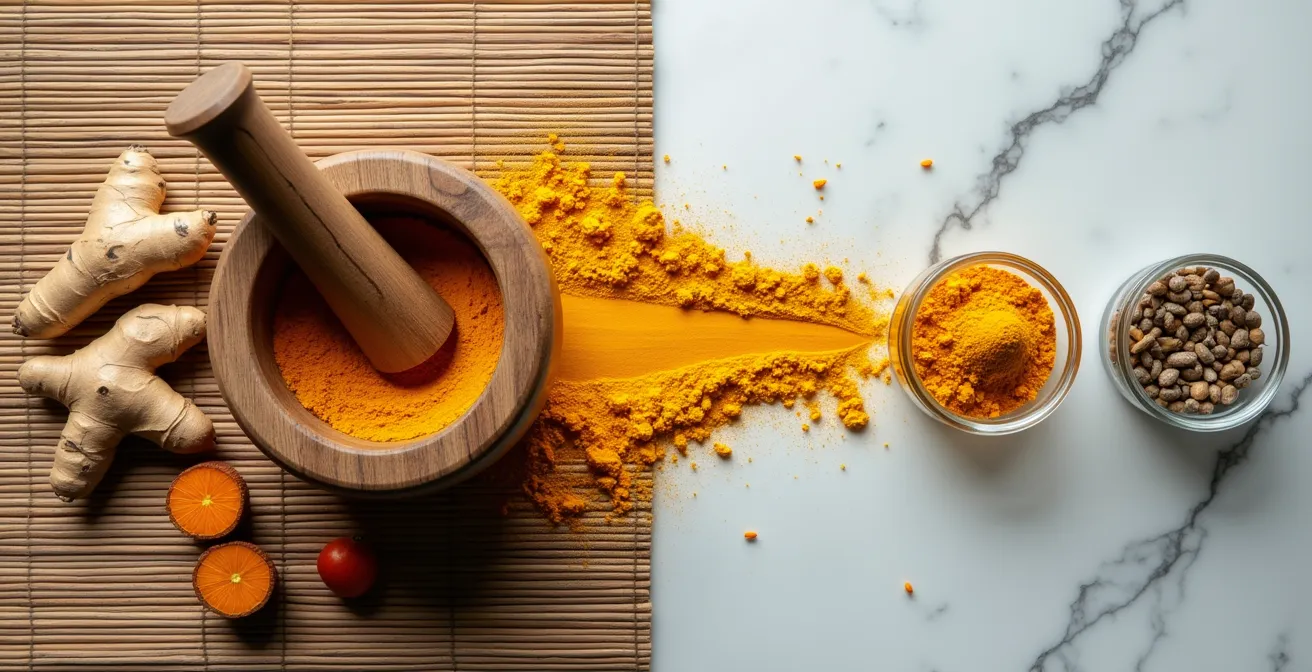
From a chef’s perspective, this means focusing on whole-ingredient synergy. It’s about understanding that the turmeric root, with its hundreds of compounds, is more powerful than an isolated curcumin pill. It’s knowing that pairing iron-rich lentils with a vitamin C-rich lemon dressing enhances iron absorption. This approach celebrates complexity and food intelligence, viewing the plate as a balanced ecosystem rather than a collection of isolated nutrients. It aligns perfectly with a foodie’s intuition: that real, whole, and thoughtfully prepared food is inherently superior.
When to Eat Your Heaviest Meal to Maximize Sleep Quality ?
Cooking for gut health isn’t just about *what* you eat, but also *when* you eat it. The concept of chrononutrition explores how our body’s internal clocks, or circadian rhythms, affect digestion and metabolism. One of the most impactful changes you can make for both your gut and your sleep is to shift your largest meal from dinner to lunchtime. This practice aligns with your body’s natural digestive capabilities, which are not constant throughout the day.
Your digestive system is primed for peak performance around midday. This is when your stomach produces the most acid and your pancreas secretes the highest volume of digestive enzymes. Eating a large, complex meal at this time means your body can break it down efficiently, absorb the maximum amount of nutrients, and convert food into energy for the rest of your day. As evening approaches, your digestive system naturally begins to wind down for a night of rest and repair.
Eating a heavy meal late at night forces your gut to work overtime when it should be resting. This can lead to indigestion, acid reflux, and bloating, all of which disrupt sleep. Furthermore, this nocturnal digestion is less efficient. Chrononutrition research shows a significant 30% reduction in SCFA production (the beneficial compounds made by your gut bacteria) during nighttime digestion compared to daytime. A lighter dinner, consumed at least three hours before bed, allows your gut to complete its work and transition into its repair-and-maintenance cycle, paving the way for deeper, more restorative sleep.
How to Master the 5 Mother Sauces to Elevate Any Dish ?
For a chef, sauces are the soul of a dish. They tie ingredients together, build depth, and deliver flavor. In classic French cuisine, there are five “mother sauces” (Béchamel, Velouté, Espagnole, Hollandaise, and Tomato) from which hundreds of variations are born. Unfortunately, many classic preparations rely on inflammatory ingredients like refined flour, dairy, and large amounts of butter. The good news is that we can re-imagine these foundations using gut-friendly principles and techniques to create sauces that are both delicious and healing.
The core of this transformation is swapping inflammatory bases for nutrient-dense alternatives. A creamy Béchamel can be recreated with a rich cashew or cauliflower cream, providing fiber and healthy fats instead of dairy. A deep, savory Espagnole finds its modern-day counterpart in a miso-mushroom gravy, which delivers profound umami and a dose of probiotics. This isn’t about pale imitations; it’s about building even more complex and interesting flavors using a new pantry of ingredients. Mastering techniques like emulsifying with tahini or thickening with pureed vegetables instead of a flour-based roux is key.
Action Plan: Auditing Your Flavor Pantry for Gut Health
- Points of contact: List the primary flavor profiles you rely on weekly (e.g., creamy dairy, savory bouillon, sharp vinaigrette).
- Collecte: Inventory your current sauces, dressings, and thickeners (e.g., cornstarch, heavy cream, store-bought tomato sauce, packet gravies).
- Cohérence: Compare this inventory against gut-health principles. Are they rich in fiber and phytonutrients or high in refined oils, sugar, and dairy?
- Mémorabilité/émotion: Identify one “boring” or unhealthy sauce you use often (like a bottled ranch) and find a vibrant, gut-friendly alternative to master (like an avocado-tahini emulsion).
- Plan d’intégration: Commit to making one gut-healthy “mother sauce” base this week, such as a large batch of cashew cream or a rich mushroom broth to use in multiple meals.
This table offers a clear guide to transforming these culinary cornerstones.
| Classic Sauce | Gut-Healthy Alternative | Key Benefits | Flavor Profile |
|---|---|---|---|
| Béchamel | Cashew/Cauliflower Cream | Dairy-free, prebiotic fiber | Creamy, nutty, mild |
| Velouté | Vegetable/Mushroom Broth | Rich in beta-glucans | Umami, earthy depth |
| Espagnole | Miso-Mushroom Gravy | Fermented probiotics | Deep umami, complex |
| Hollandaise | Avocado-Tahini Emulsion | Healthy fats, minerals | Rich, tangy, smooth |
| Tomato | No-Sugar Fennel Tomato | Digestive support | Bright, aromatic |
Gut Feelings: How Stress Alters Your Microbiome Composition ?
The phrase “gut feeling” is more than a metaphor; it’s a testament to the profound and direct connection between your brain and your digestive system, known as the gut-brain axis. This bidirectional highway means that just as your gut health can influence your mood, your mental and emotional state can dramatically alter the health of your gut. Chronic stress is one of the most potent disruptors of a healthy microbiome.
When you’re stressed, your body goes into “fight or flight” mode, diverting resources away from “rest and digest” functions. Blood flow is redirected from the gut to the muscles, digestive enzyme secretion slows down, and gut motility can either grind to a halt (constipation) or go into overdrive (diarrhea). On a microscopic level, the consequences are even more significant. The hormonal cascade triggered by stress, led by cortisol, directly impacts the composition of your gut bacteria.
This isn’t just theory; it’s measurable. Research on the gut-brain axis shows that high-stress states can alter the critical Firmicutes/Bacteroidetes ratio and reduce beneficial bacteria abundance by up to 40%. This creates a less diverse, less resilient microbial ecosystem, making you more susceptible to inflammation and digestive symptoms. It underscores the idea that a truly gut-healing protocol cannot focus on diet alone. It must also include stress-management practices.
From a culinary perspective, this highlights the importance of mindful eating. Taking the time to sit, chew thoroughly, and savor your food shifts your nervous system into a parasympathetic (rest and digest) state, creating the optimal internal environment for digestion. Cooking itself can be a meditative practice, and sharing a meal with others is a powerful way to reduce stress. Ultimately, managing stress is as crucial for your gut as any prebiotic fiber or probiotic food.
Key takeaways
- Culinary Technique Unlocks Nutrition: How you prepare your food (e.g., using acid, proper cooking) is as important as what you eat for making nutrients available to your body.
- Diversity and Joy Trump Restriction: A resilient gut thrives on a wide variety of flavorful foods, and the stress from obsessive “clean eating” can do more harm than good.
- Seasonality Is Peak Flavor and Function: Eating with the seasons provides the most nutrient-dense and delicious ingredients, perfectly aligning taste with wellness.
Why Imported Strawberries in Winter Are Nutritionally Empty ?
A bright red strawberry in the dead of winter might look appealing, but from a nutritional and flavor standpoint, it’s a pale imitation of its seasonal counterpart. This illustrates a core principle of flavor-forward gut health: seasonality is paramount. Foods grown and harvested in their natural season and climate are not only more delicious but also vastly more nutrient-dense. The journey of an out-of-season fruit tells a story of compromise.
That winter strawberry was likely picked while still green and hard in a distant country, bred for durability, not flavor. It was then artificially ripened with ethylene gas during a long transit, never developing the complex sugars and aromatic compounds that a sun-ripened, local berry would have. This process significantly impacts its nutritional value. The beneficial compounds in plants, especially the colorful pigments known as flavonoids and polyphenols, are produced as part of the plant’s natural life cycle and response to its environment. They are a sign of vitality.
When a plant’s growth cycle is manipulated for year-round availability, its ability to produce these protective compounds is stunted. As a result, that imported berry is mostly sugar and water, lacking the robust antioxidant and anti-inflammatory properties of a seasonal one. In fact, phytochemical analysis reveals that seasonal produce can contain 3-5x more bioactive compounds than out-of-season imports. Choosing seasonal means you are getting the most flavor and the most potent dose of gut-supporting phytonutrients for your money.
This principle encourages us to reconnect with the rhythm of nature. It’s a call to explore the farmer’s market, to celebrate the fleeting perfection of asparagus in spring, tomatoes in summer, and squash in autumn. This isn’t a restriction; it’s an invitation to a more vibrant and varied culinary life, where peak flavor and peak nutrition are one and the same.
Start your journey to delicious digestive wellness by mastering one new technique this week, whether it’s building a gut-healthy sauce or embracing a new seasonal vegetable. Your gut—and your palate—will thank you.
Frequently asked questions about How to Cook for Gut Health Without Sacrificing Flavor ?
What’s the difference between caloric density and digestive load?
A high-fat, high-protein meal like steak is digestively ‘heavier’ than a larger volume carb-rich meal like sweet potato stew, requiring more enzymatic work regardless of calories.
What is the optimal eating schedule for sleep?
Eat your largest meal at lunch when enzyme secretion peaks, have a moderate dinner 3+ hours before bed, and if needed, a small sleep-promoting snack with magnesium and natural melatonin.