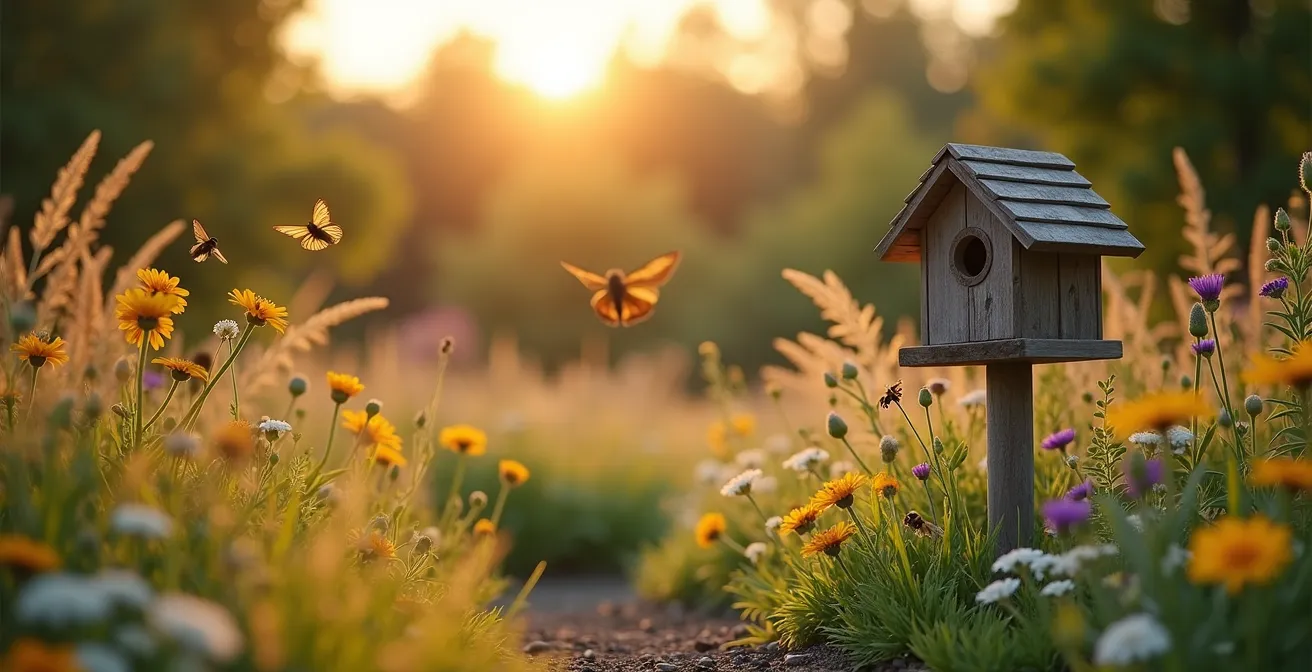
Creating a garden that supports wildlife is less about adding bird feeders and more about engineering a self-sustaining native ecosystem.
- Prioritize native plants to drastically reduce water use and provide the right food for local insects.
- Build healthy soil with compost and create physical habitats (like log piles) to support the entire food web.
Recommendation: Start by replacing a section of your lawn with a small group of region-appropriate native plants.
The desire for a garden teeming with life—the cheerful chirp of birds, the gentle hum of bees, the flash of a butterfly’s wing—is a common one. Yet, many homeowners find their efforts result in a space that feels more like a sterile outdoor room than a vibrant sanctuary. We’re often told to add a bird feeder or plant some colorful annuals, but these are merely temporary fixes. They treat the garden as a collection of separate objects rather than a living, breathing system.
Many conventional gardening practices, focused on exotic species and pristine neatness, inadvertently create ecological deserts. The belief that a wildlife-friendly garden must be “messy” or unkempt is a persistent myth. The truth is far more elegant. The key isn’t to abandon design, but to adopt a new philosophy: one of ecological landscaping. This approach views the gardener not as a decorator, but as a gentle engineer of a small-scale, self-regulating ecosystem.
Instead of focusing on isolated solutions, what if the real secret was building a resilient foundation from the ground up? A garden designed with ecological principles in mind doesn’t just attract wildlife; it sustains it. It creates a complete food web, offers shelter through all seasons, and conserves precious resources, all while providing profound aesthetic and personal rewards. This guide will walk you through the essential principles for transforming your yard into a beautiful, functional, and truly alive ecosystem.
For those who prefer a visual summary, the following video encapsulates many of the core ideas for creating a vibrant, wildlife-friendly space.
To help you navigate this ecological approach, we have structured this guide around key principles. Each section builds upon the last, taking you from the foundational choices of plants and soil to the four-season strategy that makes a garden a true haven.
Summary: A guide to creating a landscape that is a living ecosystem
- Why Native Plants Require 50% Less Water Than Exotics ?
- Bee Hotels and Bird Baths: How to Attract Pollinators Safely ?
- Compost vs Fertilizer: Improving Soil Structure Naturally
- The Ladybug Solution: How to Control Aphids Without Chemicals ?
- Optimizing Winter Interest: What to Plant for Color in January ?
- How to Find True Local Producers vs Resellers at Farmers Markets ?
- Phytoncides: Why Breathing Forest Air Boosts Your Immune System ?
- How to Support Sustainable Agriculture Without Breaking the Bank ?
Why Native Plants Require 50% Less Water Than Exotics ?
The single most impactful decision you can make in ecological garden design is to prioritize native plants. These are species that have co-evolved with your local climate, soil, and wildlife for millennia. Their adaptation is so profound that they form the very bedrock of the local food web. Unlike exotic ornamentals, which often require constant intervention, native plants are uniquely suited to thrive with minimal input once established.
The most dramatic benefit is water conservation. Traditional turf lawns and many popular non-native plants are notoriously thirsty, often demanding huge amounts of supplemental irrigation to survive. In contrast, native plants are masters of water efficiency. Because their root systems and foliage are adapted to local rainfall patterns, they require significantly less water. In fact, landscaping with native flora can result in using 60 to 80 percent less water than a conventional garden, a crucial advantage in a world of increasing water scarcity.
This efficiency comes from their structure. Many native species have deep root systems that can access moisture far below the surface, making them resilient to drought. They are programmed to work with the seasons, often growing most vigorously during rainy periods and entering a state of semi-dormancy during dry spells. Choosing native plants is the first and most critical step in your role as an ecosystem engineer, creating a garden that works with nature, not against it.
Bee Hotels and Bird Baths: How to Attract Pollinators Safely ?
With a foundation of native plants in place, your garden will begin to attract pollinators. The next step is to provide them with the essential resources they need beyond nectar: water and shelter. However, some of the most common methods can be ineffective or even harmful if not implemented thoughtfully. For instance, while bee hotels have become popular, they often cater to only a small fraction of bee species and can attract parasites if not managed correctly.
The surprising truth is that a staggering 70% of native bees are ground-nesters, requiring small patches of bare, undisturbed earth to dig their nests. Simply leaving a few sunny, well-drained spots of soil uncovered is one of the most effective ways to support a wide diversity of these essential pollinators. This is a perfect example of how doing less can achieve more in a wildlife garden.
Water is just as critical, but open bird baths can be a drowning hazard for smaller insects. A safe and effective water station can be created with a shallow basin filled with pebbles, marbles, or small stones. This provides safe landing pads for bees, butterflies, and other beneficial insects to drink without risk. This simple piece of habitat architecture serves a far wider range of creatures than a conventional bird bath.
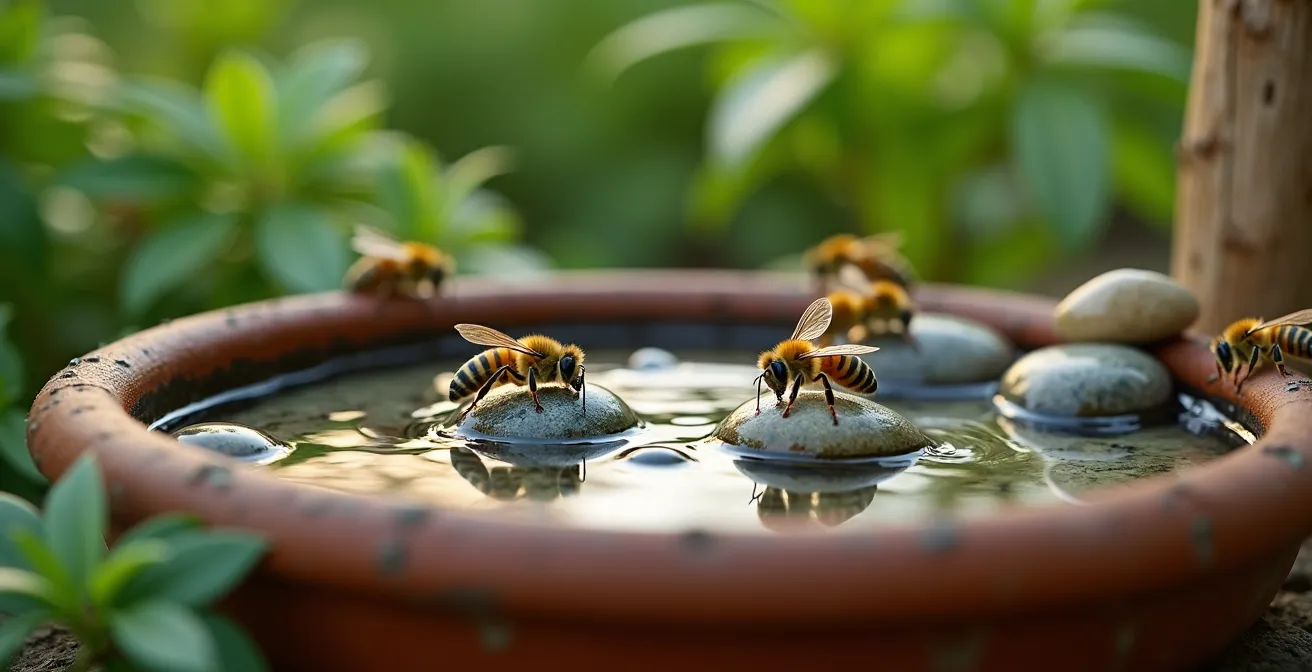
As you can see, the key is to provide access to water without creating a trap. For those with more space, even a small, self-contained pond can become a biodiversity hotspot, creating a complete aquatic habitat for frogs, dragonflies, and other species that form a vital part of the garden ecosystem.
Compost vs Fertilizer: Improving Soil Structure Naturally
A thriving garden ecosystem begins below the surface. The soil is not inert dirt; it is a bustling, living matrix known as the soil food web, teeming with billions of microorganisms, fungi, and invertebrates. The health of this underground community directly determines the health of the plants above. This is where the crucial distinction between compost and synthetic fertilizer comes into play.
Synthetic fertilizers are like a fast-food fix for plants. They provide a quick hit of soluble nutrients directly to the plant’s roots, but they do nothing to feed the soil life or improve its structure. Over time, they can even harm the microbial community. Compost, on the other hand, is a slow-release feast for the entire soil ecosystem. It is organic matter—leaf litter, kitchen scraps, grass clippings—broken down by microbes. When you add compost to your garden, you are feeding the bacteria, fungi, and earthworms that build healthy soil.
This living soil has a spongy, friable structure that holds moisture, resists compaction, and allows plant roots to grow deep. It’s a key part of carbon sequestration; a landmark 2020 study found that soil under exotic plants released 2.5 times more CO2 than soil under native plants, showing how native flora and healthy soil work together to stabilize and store carbon. Beyond a traditional compost pile, you can create decomposition habitats like log piles, rock piles, or simply leaving a layer of fallen leaves. This “mess” is actually a critical form of habitat architecture, providing shelter for insects and slowly enriching the soil.
The Ladybug Solution: How to Control Aphids Without Chemicals ?
One of the most rewarding signs of a maturing garden ecosystem is when it begins to regulate itself. In a conventional garden, an aphid outbreak prompts a rush for chemical sprays or a carton of purchased ladybugs. In an ecological garden, the approach is different: you don’t solve the aphid problem, you create a system where the aphid problem doesn’t exist. This is achieved by supporting a healthy population of predators.
Releasing store-bought ladybugs is often ineffective, as they tend to fly away if there isn’t an adequate food source or the right habitat. A far more sustainable strategy is to attract and retain a diverse community of native predators—ladybugs, lacewings, hoverflies, and predatory wasps. You do this by providing for their complete life cycle. This means not only tolerating a small number of pest insects (their food source) but also planting a variety of native flowering plants that provide the nectar and pollen these beneficial insects need as adults.
The key is diversity. A garden with a rich variety of native plants supports a wider array of insects, which in turn supports a greater diversity of predators. Certain native plants are true superstars in this regard. For example, a single native oak tree can support an incredible 450+ species of moths and butterflies, whose caterpillars are the primary food source for nesting birds. The presence of predators becomes an ecological trophy, a sign that your garden is a balanced, functioning food web, not a sterile display.
Optimizing Winter Interest: What to Plant for Color in January ?
A common misconception is that a garden’s value to wildlife ends with the first frost. In reality, the winter months are a critical period when food and shelter are scarcest. A truly supportive ecological garden is designed for four-season provision, offering sustenance and habitat year-round. This is also where an ecological garden’s unique aesthetic shines, revealing a subtle beauty in forms, textures, and the quiet activity of winter residents.
Instead of clearing everything away in the fall, leave the seed heads of perennials like coneflowers (Echinacea) and Black-eyed Susans (Rudbeckia) standing. These provide a vital, high-energy food source for finches and other seed-eating birds throughout the cold months. The sight of frost-covered seed heads against a low winter sun is one of the most beautiful and rewarding scenes in a wildlife garden.
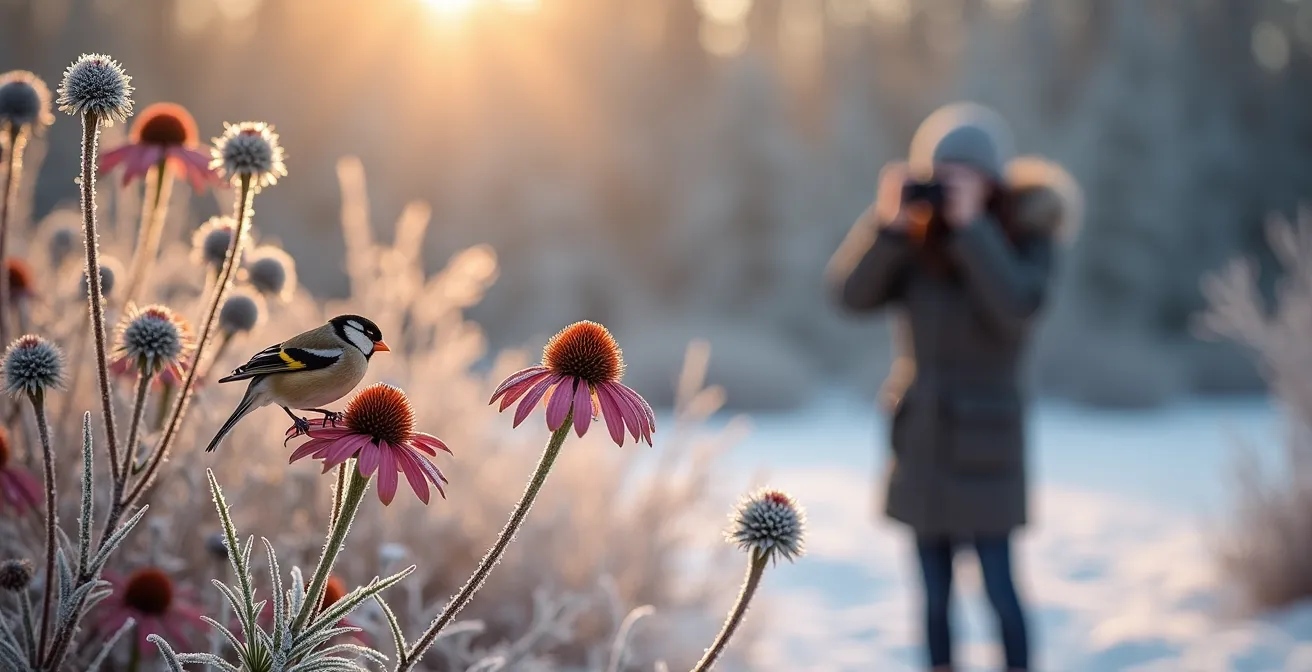
Structure and shelter are just as important. Evergreen shrubs provide crucial cover from harsh weather and predators. Pithy stems of plants like elderberry or Joe-Pye weed offer overwintering sites for the larvae of native bees. A simple brush pile, created from winter pruning, can become a lifesaving shelter for small mammals and birds. Planting berry-producing shrubs like dogwood or winterberry provides essential calories in the form of high-fat fruits. This winter landscape is not empty; it’s a quiet, functioning larder and dormitory, ensuring the life in your garden can endure until spring.
How to Find True Local Producers vs Resellers at Farmers Markets ?
Once you’ve committed to using native plants, the question becomes where to source them. This step is crucial, as the provenance of your plants can make a significant difference. Many large commercial nurseries or big-box stores sell plants that are technically “native” to the country but are not specific to your local region. These plants, sometimes called “nativars,” may be mass-produced, treated with systemic pesticides harmful to pollinators, and not genetically adapted to your specific conditions.
The goal is to find true local ecotypes—plants grown from seeds collected in your region that are perfectly attuned to your environment. This often means seeking out specialist native plant nurseries. These are often smaller, passion-driven operations dedicated to ecological integrity. They can provide invaluable advice and ensure you are getting plants that will offer the maximum benefit to local wildlife. Organizations like local native plant societies or Wild Ones chapters often maintain lists of recommended growers.
Beyond plants, ethical sourcing applies to other materials. Instead of buying bagged mulch, you can often get free wood chips from local, certified arborists. This recycles a local waste product and creates a fantastic mulch that builds soil health. Similarly, being observant and resourceful can yield materials for habitat features, like fallen branches from a neighbor’s yard (with permission). This approach shifts the mindset from being a consumer to being a resourceful partner in the local landscape.
Your Action Plan for Sourcing Authentic Native Plants
- Points of contact: Inquire directly at nurseries about their seed provenance and growing methods. Contact your local native plant society for specialized grower recommendations.
- Collect: Source free, pesticide-free wood chips from certified local arborists for mulch and ask permission to collect fallen logs from construction sites or neighbors for habitat piles.
- Coherence: Compare plant offerings at a nursery to garden plans created by regional experts to ensure you are sourcing true local ecotypes, not generic “nativars”.
- Memorability & Emotion: Join local seed swaps and plant exchanges to connect with a community of fellow wildlife gardeners and acquire locally-adapted seeds.
- Plan for Integration: When selecting plants, prioritize deep-rooted species that match your garden’s specific “hydrozones” or water-need areas to maximize survival and minimize irrigation.
Phytoncides: Why Breathing Forest Air Boosts Your Immune System ?
A garden designed as a living ecosystem does more than support wildlife; it also nurtures the people who tend to it. The aesthetic appeal of a naturalistic garden is profound, offering a constantly changing tapestry of colors, textures, and life. But the benefits go deeper, touching our physical and mental well-being. One of the most fascinating aspects of this is the science of “forest bathing,” or Shinrin-yoku.
Trees and other plants release airborne essential oils called phytoncides to protect themselves from pests and disease. When we inhale these compounds, they have been shown to have measurable positive effects on our bodies, including reducing stress hormones and boosting the activity of immune cells. By layering your garden with canopy trees like native oaks or pines, understory shrubs, and aromatic herbs, you can create a small-scale therapeutic landscape right outside your door.
The design of the garden can enhance these effects. Creating quiet seating areas surrounded by dense plantings can reduce noise pollution and create a sense of immersion. Meandering paths that wind through the garden encourage mindful walking and discovery. The very act of gardening itself—of spending time in a natural environment and engaging in gentle physical activity—is a powerful tool for boosting mood and overall well-being. This creates a reciprocal relationship: as you care for the garden’s ecosystem, it cares for you in return.
Key takeaways
- Prioritize Native Plants: They are the foundation of the local food web, requiring less water and maintenance.
- Build from the Ground Up: Healthy, living soil and physical habitat structures are more important than isolated feeders.
- Design for All Seasons: A true wildlife garden provides essential food and shelter year-round, especially in winter.
How to Support Sustainable Agriculture Without Breaking the Bank ?
Embracing an ecological approach in your garden extends your impact far beyond your property line. Every square foot of lawn converted to a native habitat contributes to a larger network of green corridors, helping wildlife move through suburban landscapes. It reduces water demand, eliminates chemical runoff, and sequesters carbon. In essence, your garden becomes a small act of sustainable agriculture that supports the health of your entire community.
Many people assume that this kind of landscaping is more expensive or time-consuming than a traditional lawn. In the long run, the opposite is true. While there may be an initial investment in plants, the savings over time are substantial. The drastically reduced need for water can lead to significant savings on utility bills; one Colorado neighborhood that embraced native plants collectively saved 15 million gallons of water in one year. The elimination of fertilizers, pesticides, and weekly mowing saves both money and countless hours of labor.
The true value, however, cannot be measured in dollars alone. It’s measured in the return of birdsong, the satisfaction of seeing a rare butterfly, and the knowledge that your small patch of earth is a positive force in the world. This table clearly illustrates the trade-offs between a sterile lawn and a living garden.
This comparative analysis highlights the profound differences in impact between a conventional lawn and a thoughtfully designed wildlife garden.
| Cost Factor | Traditional Lawn | Wildlife Garden |
|---|---|---|
| Water Usage | 50% of residential water | 60-80% less water needed |
| Maintenance Time | Weekly mowing, edging | Seasonal pruning only |
| Chemical Inputs | Fertilizers, pesticides required | None needed with natives |
| Wildlife Value | Minimal habitat | Supports entire food web |
| Carbon Impact | Net carbon emitter | Carbon sequestration |
Start small. You don’t need to transform your entire yard overnight. Choose one small section, remove the turf, prepare the soil with compost, and plant a small community of native perennials and shrubs. Begin your journey of ecosystem engineering today, and watch as life returns to your garden.