The “healthy” food you buy is likely filled with industrial chemicals hidden by misleading labels and regulatory loopholes.
- Deceptive marketing terms like “natural flavors” and ingredient aliases for additives like MSG are designed to confuse consumers.
- Major loopholes in US food safety law allow thousands of chemicals, some banned in Europe, into the food supply without robust government review.
Recommendation: Stop trusting front-of-package marketing and become a food detective by scrutinizing the ingredient list to truly understand what you’re eating.
Standing in the snack aisle, you’re faced with a wall of brightly colored packages, all screaming “natural,” “healthy,” and “wholesome.” As a health-conscious parent or shopper, you do your due diligence. You scan the front, pick a product that seems trustworthy, and feel good about your choice. Yet, nagging doubts remain. Why does this “all-natural” fruit bar have a shelf life of two years? What exactly is “yeast extract” or “natural flavor” in your child’s favorite crackers? The common advice is to “read the label,” but this often raises more questions than it answers.
The food industry has mastered the art of camouflage. It uses a sophisticated language of distraction and misdirection, designed to make highly processed products appear benign. We’re told to look for organic labels or avoid long ingredient lists, but these are just starting points. They don’t protect you from the core of the problem: a system that allows thousands of chemicals to enter our food supply with minimal oversight, often hiding behind innocent-sounding names.
But what if the key wasn’t just reading labels, but learning to *decode* them? What if you could develop an investigative mindset that sees past the marketing and identifies the red flags that manufacturers hope you’ll miss? This guide is not just another list of “bad” ingredients. It’s a training manual to become a food detective. We will go beyond the platitudes and expose the mechanisms of deception, from ingredient aliases and regulatory loopholes to the semantic traps that lure you into a false sense of security.
By understanding the “why” and “how” behind food labeling, you can regain control over your family’s diet, make truly informed choices, and build a pantry free from the hidden chemicals that undermine your health goals. It’s time to turn the tables and learn the secrets of the trade.
Summary: Your Guide to Spotting Hidden Artificial Additives in “Healthy” Snacks
- Why Monosodium Glutamate Hides Under 5 Different Names on Labels ?
- The Red Dye Link: Does Food Coloring Actually Cause Hyperactivity ?
- Natural Preservatives vs Artificial: Which Actually Keeps Food Fresh ?
- Europe vs USA: Why Ingredients Banned Overseas Are Legal Here ?
- Optimizing Your Pantry: How to Replace Processed Staples for Under $50 ?
- The “Natural” vs “Organic” Trap: What Marketing Lies Are You Buying ?
- The Carbon Footprint of Avocados: Is Your Toast Killing the Planet ?
- Why Switching to Home Cooking Saves You $200/Month ?
Why Monosodium Glutamate Hides Under 5 Different Names on Labels ?
Monosodium Glutamate (MSG) is the food industry’s most notorious master of disguise. While many consumers actively avoid it, manufacturers have become adept at hiding it in plain sight. This isn’t just about omitting the acronym; it’s about using “ingredient aliases” that provide the same chemical function without triggering alarm bells. When the body processes these ingredients, it breaks them down into free glutamic acid, the very component of MSG that people seek to avoid. This practice allows a product to be labeled “No MSG” or “No Added MSG” while still delivering the same chemical effect.
The most common aliases for MSG include hydrolyzed vegetable protein, autolyzed yeast extract, textured protein, and yeast extract. These are often found in savory snacks, canned soups, and frozen meals. Because they are derived from natural sources (like corn, soy, or yeast), they can be presented as harmless components. However, the processing they undergo is what liberates the glutamic acid, creating the flavor-enhancing effect. This strategic labeling is a deliberate tactic to navigate consumer preferences while maintaining product formulation.
Understanding this deception is the first step in becoming a food detective. It reveals a fundamental truth: the name on the ingredient list is often less important than the chemical function it serves. While the FDA considers MSG and its cousins safe for most people, some individuals report adverse reactions. For those trying to eliminate it, the task becomes a game of memorizing aliases. According to FDA data, the average adult consumes approximately 0.55 grams of added MSG per day, a figure that likely doesn’t account for its hidden forms. This highlights the gap between what’s on the label and what’s actually in your food.
The Red Dye Link: Does Food Coloring Actually Cause Hyperactivity ?
The debate over artificial food dyes, particularly Red No. 40, Yellow No. 5, and Yellow No. 6, has been a source of concern for parents for decades. These petroleum-derived substances are used to give snacks, drinks, and candies a vibrant, appealing color that is often impossible to achieve naturally. The core of the controversy lies in a growing body of research suggesting a link between the consumption of these dyes and adverse behavioral effects in children, including hyperactivity and inattentiveness.
This concern is not unfounded. In fact, the regulatory approach to these additives highlights a stark difference between the U.S. and other parts of the world. The European Food Safety Authority (EFSA), for example, has taken a more cautious stance. Following a landmark 2007 study, the EU mandated that most foods containing these specific synthetic colors must carry a warning label stating: “may have an adverse effect on activity and attention in children.” This regulatory action has led many manufacturers to voluntarily replace artificial dyes with natural alternatives like beet juice or paprika in their European products.
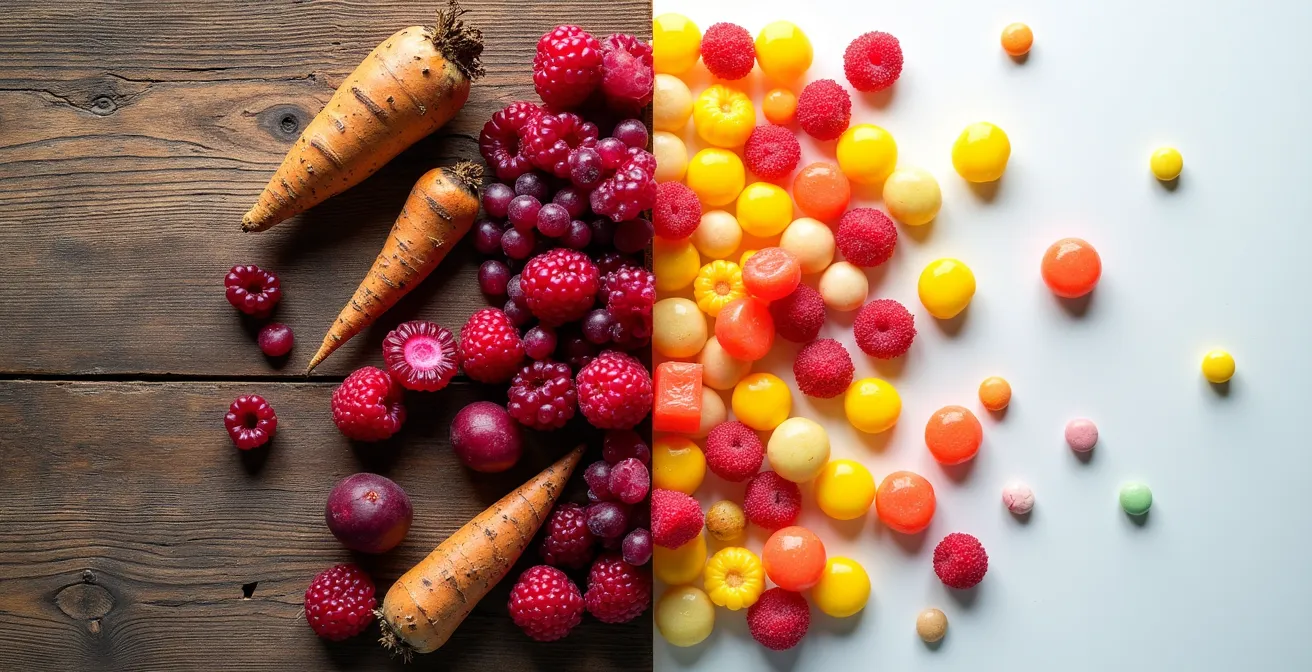
In the United States, however, the FDA has concluded that current evidence does not establish a causal link for the general population, so no such warnings are required. This leaves American parents in the dark, often unknowingly purchasing products with colorants that would be flagged overseas. The visual trickery is potent; the brilliant hues of processed snacks are engineered to appeal directly to a child’s brain, creating a powerful desire for foods that offer little nutritional value and potential behavioral risks. It’s a clear case where marketing appeal has been prioritized over the precautionary principle.
Natural Preservatives vs Artificial: Which Actually Keeps Food Fresh ?
Preservatives are essential for creating shelf-stable “healthy” snacks, preventing spoilage from mold, bacteria, and fat rancidity. However, the choice between artificial and natural preservatives is a critical one, with significant implications for both shelf life and health. Artificial preservatives like Butylated Hydroxyanisole (BHA), Butylated Hydroxytoluene (BHT), and Tert-butylhydroquinone (TBHQ) are highly effective, dramatically extending the time a product can sit on a shelf. But this convenience comes at a potential cost, as these chemicals have been linked to health concerns.
One of the most deceptive practices is how these are listed. As the Environmental Working Group points out, this is a perfect example of a semantic trap. Their experts note:
Artificial preservatives are often listed for their function as ‘antioxidants’, a term that sounds healthy to consumers but is simply a chemical preservation method.
– Environmental Working Group, EWG’s Dirty Dozen Guide to Food Chemicals
This is intentionally misleading. While antioxidants are beneficial in whole foods, the synthetic “antioxidants” used for preservation are industrial chemicals. In contrast, natural preservatives like tocopherols (Vitamin E), rosemary extract, and citric acid are generally recognized as safe. They are effective, but typically offer a shorter shelf life, which is why many large-scale manufacturers opt for artificial alternatives. The table below, based on data from food safety watchdogs, clarifies the trade-offs.
| Type | Common Examples | Shelf Life | Health Concerns |
|---|---|---|---|
| Artificial | BHA, BHT, TBHQ | 6-12 months | Possible carcinogens, hormone disruption |
| Natural | Vitamin E, Rosemary Extract, Citric Acid | 3-6 months | Generally recognized as safe |
| Fermentation | Lactic Acid, Vinegar | 3-9 months | May provide probiotic benefits |
For the vigilant shopper, an ingredient list containing BHA, BHT, or TBHQ is a clear red flag. Opting for products preserved with recognizable, nature-derived ingredients is a straightforward way to reduce exposure to questionable chemicals, even if it means accepting a slightly shorter expiration date.
Europe vs USA: Why Ingredients Banned Overseas Are Legal Here ?
One of the most jarring discoveries for any food detective is the “transatlantic-double-standard”: ingredients that are banned or heavily restricted in the European Union are commonplace in the American food supply. This isn’t an accident; it’s the direct result of a fundamental difference in regulatory philosophy. The EU largely operates on the “precautionary principle,” which means that if a substance has a suspected risk of harm, it is restricted until proven safe. The U.S., on the other hand, generally requires definitive proof of harm before an additive is removed from the market.
The primary mechanism for this discrepancy is a loophole in FDA regulation known as “Generally Recognized As Safe,” or GRAS. Originally intended for common ingredients like vinegar and salt, the GRAS process has been exploited by the industry. Food and chemical companies can hire their own experts to declare an ingredient as GRAS, bypassing a formal FDA review. This self-policing system is deeply flawed. A KFF Health News investigation revealed that almost 99 percent of food chemicals introduced since 2000 were greenlighted by companies, not the FDA itself.
This has created a situation where, as one report put it, “the loophole swallowed the law.” This is why additives like potassium bromate (a flour improver linked to cancer in animals) and certain artificial food dyes are found in U.S. products but are banned in the EU. For consumers, this means the responsibility of vetting ingredients falls squarely on their shoulders. You cannot assume that because a product is on the shelf, it has undergone rigorous, independent safety testing by a government body. The GRAS system creates a vast gray area where hundreds of chemicals with limited safety data can legally enter your “healthy” snacks.
Optimizing Your Pantry: How to Replace Processed Staples for Under $50 ?
Becoming a food detective isn’t just about identifying what to avoid; it’s about knowing what to replace it with. A “pantry detox” is the most effective way to eliminate hidden additives from your diet. This doesn’t require a massive budget or shopping at expensive specialty stores. With a strategic investment of less than $50, you can swap out the worst offenders for wholesome, single-ingredient staples that put you back in control. The goal is to build a foundation of real foods that can be used to create your own snacks and meals.
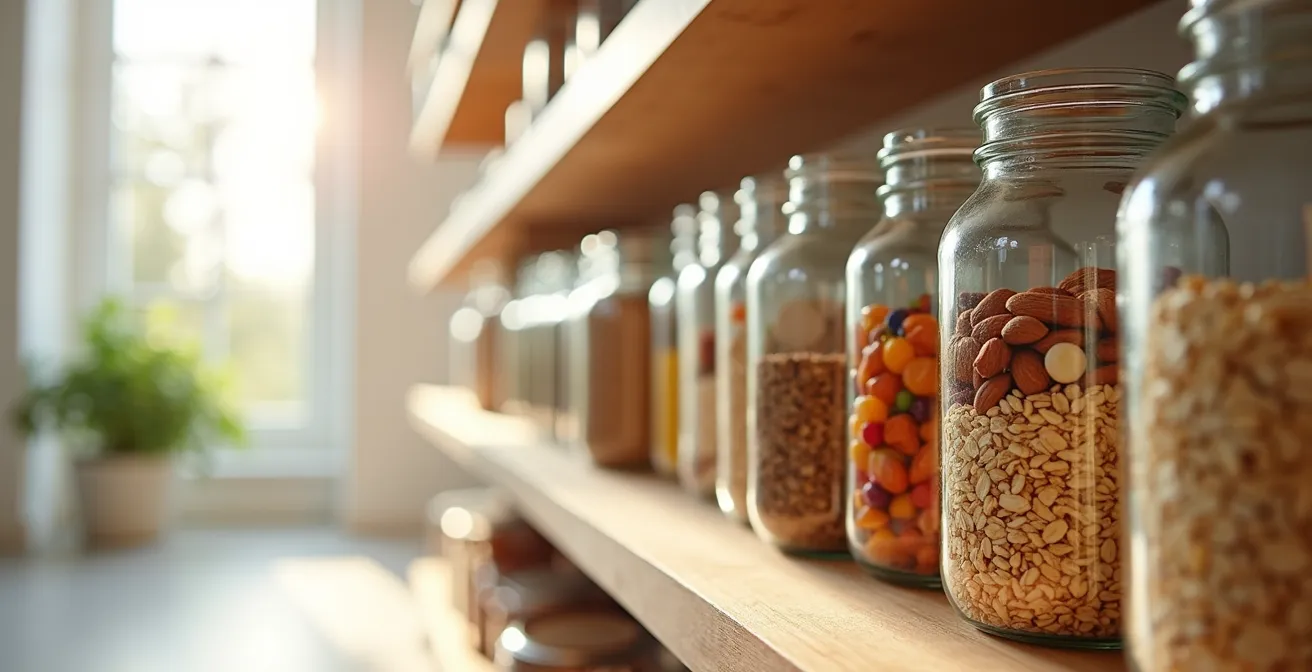
Start by targeting the most common culprits for hidden additives: granola bars, flavored yogurts, sugary cereals, and crackers with long ingredient lists. These products are often marketed as healthy but are typically loaded with preservatives, artificial flavors, and hidden sugars. By replacing them with bulk items, you get more nutritional value for your money and complete transparency. A successful pantry makeover focuses on versatility and simplicity. For example, a bag of rolled oats can be used for breakfast, homemade granola, or energy bites, offering far more possibilities than a box of processed cereal.
Here are five essential swaps you can make to begin your pantry optimization journey:
- Replace conventional granola bars with bulk nuts (like almonds or walnuts) and unsulfured dried fruit (like dates or raisins). Cost: ~$15.
- Swap flavored yogurts for large tubs of plain Greek yogurt, which you can sweeten with fresh berries or a drizzle of honey. Cost: ~$12.
- Choose whole-grain crackers with three ingredients or less (flour, water, salt) over snack crackers with long, chemical-filled lists. Cost: ~$8.
- Replace sugary cereals with a large bag of rolled oats and a container of cinnamon. Cost: ~$7.
- Stock up on single-ingredient nut butters (e.g., just “peanuts, salt”) instead of spreads with added sugar and hydrogenated oils. Cost: ~$8.
This initial investment sets the stage for long-term savings and a dramatic reduction in your family’s exposure to artificial additives. It’s about shifting your mindset from buying finished products to buying versatile ingredients.
The “Natural” vs “Organic” Trap: What Marketing Lies Are You Buying ?
Of all the words used on food packaging, “natural” is perhaps the most powerful and the most meaningless. The FDA has no formal definition for the term, allowing it to be used on products that are heavily processed and contain synthetic ingredients. This creates a significant “semantic trap” for consumers, who often equate “natural” with “healthy” or “unprocessed.” The “natural flavor” line item on an ingredient list is a perfect example of this deception. While it must originate from a natural source (like a plant or animal), the end product can be a complex chemical concoction, created in a lab to mimic a flavor.
Experts at Naturally Savvy highlight the core of the issue: the FDA does not require flavor companies to disclose ingredients as long as all the components have been deemed ‘Generally Recognized as Safe (GRAS)’. This means a single “natural raspberry flavor” could contain dozens of different chemical compounds, including solvents and preservatives, none of which have to be listed on the label. This lack of transparency is a huge red flag, especially when you consider there are nearly 4,000 direct food additives registered on the FDA database, many of which can hide under this umbrella term.
In contrast, the term “organic” is highly regulated. The “USDA Organic” seal guarantees that a product’s ingredients were grown without synthetic pesticides, GMOs, or artificial fertilizers. While an organic product can still be processed, its list of allowable additives is extremely limited compared to conventional foods. A food detective understands this critical difference: “natural” is a marketing term, while “organic” is a certification standard. When in doubt, always trust the seal over the slogan. If you see “natural flavors” on a long ingredient list, it’s a strong indicator that the product is more engineered than you think.
The Carbon Footprint of Avocados: Is Your Toast Killing the Planet ?
In the world of clean eating, certain foods are elevated to hero status. Avocados, with their healthy fats and creamy texture, are a prime example. This has led to intense scrutiny of their environmental impact, with headlines questioning the “carbon footprint of your toast.” While these are valid concerns, this focus can serve as a convenient distraction from a much larger environmental and health problem: the rise of ultra-processed foods.
An ultra-processed food (UPF) is an industrial formulation made mostly or entirely from substances extracted from foods (oils, fats, sugars, starch, and proteins). They typically contain additives like artificial flavors, colors, and emulsifiers to make the final product palatable. These are the very products that fill the center aisles of the grocery store. From a health perspective, their impact is clear. A diet high in UPFs is linked to numerous chronic diseases. But their environmental toll is also staggering, requiring immense energy for extraction, synthesis, and manufacturing.
The scale of the problem is enormous. For example, data shows that in the United States, Americans on average consume ultra-processed foods for 58% of their total energy intake. Compare that to a country like Italy, known for its fresh food culture, where the figure is only 17%. Debating the water usage of a single, whole food like an avocado, while a significant portion of our diet comes from factory-made formulations, is a classic case of missing the forest for the trees. The real villain isn’t the avocado; it’s the system of industrial food production that has made UPFs the default for millions.
Key Takeaways
- Decode the Label: Prioritize scrutinizing the ingredient list over front-of-package marketing claims like “natural.”
- Know the Aliases: Be aware that additives like MSG hide under names such as “yeast extract” or “hydrolyzed protein.”
- Trust the Seal, Not the Slogan: The “USDA Organic” seal is a regulated standard, whereas “natural” is a largely undefined marketing term.
Why Switching to Home Cooking Saves You More Than Just Money
While the initial motivation for many to start cooking at home is financial, the benefits extend far beyond your wallet. Taking control of your kitchen is the single most powerful step you can take to eliminate hidden artificial additives from your diet. When you cook from scratch, you have absolute authority over every single ingredient. There are no hidden preservatives, no mysterious “natural flavors,” and no artificial dyes. You are the sole gatekeeper of what goes into your family’s meals.
This switch fundamentally changes your relationship with food. It shifts your focus from being a passive consumer of pre-packaged products to an active creator of nourishing meals. The process demystifies food production and empowers you with the knowledge and skills to opt out of the industrial food system. Even small steps, like making your own salad dressing instead of buying a bottle filled with emulsifiers and sugar, can have a significant impact on your additive intake. It’s not about becoming a gourmet chef overnight; it’s about reclaiming a basic life skill that has been outsourced to corporations for the sake of convenience.
The financial savings are, of course, a significant bonus. By focusing on whole, single-ingredient foods and avoiding the premium charged for processed and convenience items, families can easily save hundreds of dollars per month. This money can then be reinvested into higher-quality ingredients, like organic produce or grass-fed meats, further enhancing the health benefits. Ultimately, home cooking is the final and most effective act of a food detective: you don’t just spot the problems—you create the solution.
Your 5-Step Plan to Audit Your Kitchen for Additives
- Identify the Suspects: Gather all packaged snacks, sauces, cereals, and drinks from your pantry and fridge. Focus on items with more than five ingredients or terms you don’t recognize.
- Scan for Aliases: Scrutinize the labels for hidden MSG (yeast extract, hydrolyzed protein), artificial dyes (Red 40, Yellow 5), and artificial preservatives (BHA, BHT, TBHQ).
- Challenge “Natural” Claims: Put all items with “natural” or “natural flavors” in a separate pile. Cross-reference them with your knowledge of the “natural vs. organic” trap. Are they truly simple, or are they highly processed?
- Rate the Ingredients: For each product, analyze the ingredient list, which ranks items by weight. If sugar, refined flour, or a chemical name is in the top three, it’s a red flag.
- Create a Replacement Plan: Make a shopping list of whole-food alternatives for the items you’ve identified as problematic (e.g., rolled oats for sugary cereal, plain yogurt for flavored versions).
Start today by choosing one processed item in your pantry and finding a whole-food recipe to replace it. Your journey to a cleaner, healthier diet begins with a single, deliberate choice in your own kitchen.