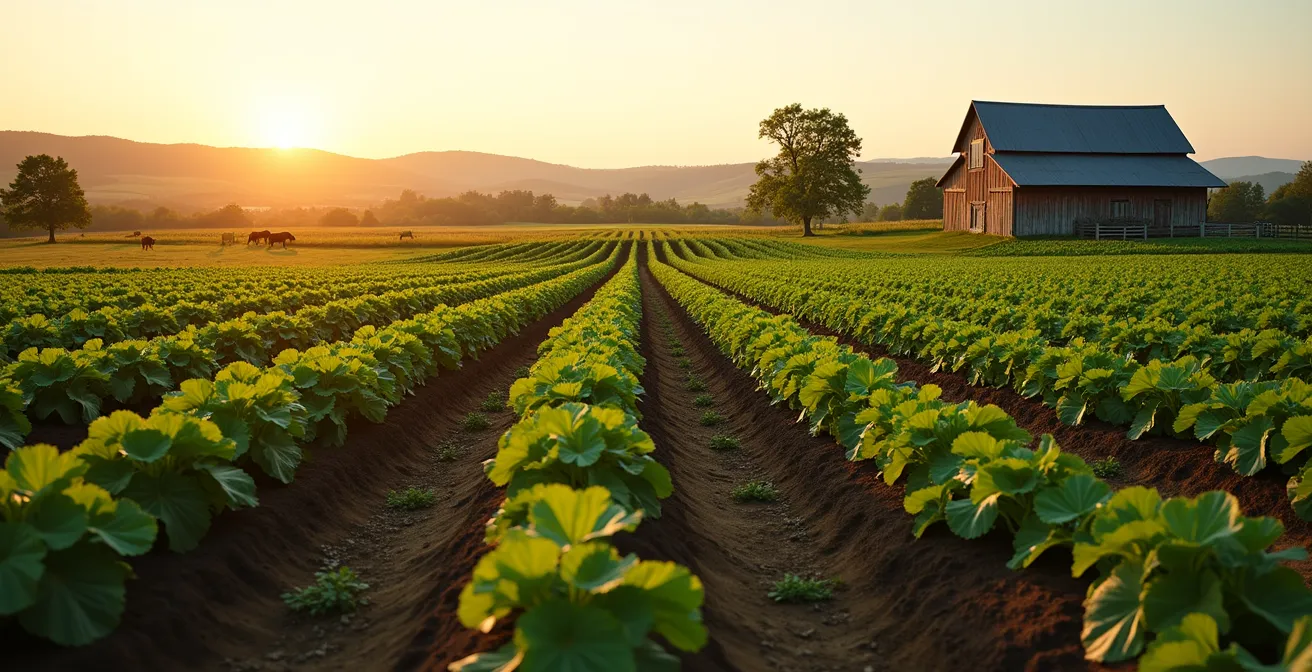
Supporting sustainable food systems is less about a bigger budget and more about smarter, informed choices that prioritize soil health.
- True value lies in nutrient density, which is a direct result of healthy, living soil—not necessarily an organic label.
- Models like CSAs, “ugly” produce, and buying directly from producers offer higher quality food while cutting costs and farm waste.
Recommendation: Start by asking one question at your local market: “How do you build your soil health?” The answer is more telling than any certification.
The desire to eat sustainably often collides with a frustrating reality: the price tag. You see the vibrant produce at the farmer’s market and the “certified organic” labels in the supermarket, and you want to make the right choice for your health and the planet. But when your grocery bill is a primary concern, a deep-seated feeling of exclusion can set in. The conventional advice to simply “buy organic” or “join a CSA” can feel simplistic and out of reach, ignoring the financial pressures many of us face.
This creates a false dichotomy, pitting your values against your wallet. You are led to believe that supporting a regenerative food system is a luxury reserved for the few. But what if this entire premise is flawed? What if the key to affordable, sustainable eating isn’t about buying expensive labels, but about fundamentally changing how we define “value”? The real power lies not in passively purchasing a product, but in actively investing in the systems that create healthy food from the ground up.
This article re-frames the conversation. We will move beyond the surface-level advice and explore the underlying economics and ecology of sustainable food. We’ll demonstrate that by focusing on systemic value—prioritizing soil health, reducing waste at the source, and connecting directly with producers—you can eat better, support regenerative agriculture, and manage your budget effectively. It’s time to shift from being a mere consumer to becoming an informed supporter of the food systems you believe in.
This guide breaks down eight practical and strategic areas where your choices can make a significant, affordable impact. From understanding the true cost of cheap food to growing your own high-value crops on a tiny balcony, you’ll find actionable steps to align your plate with your principles, without financial strain.
Summary: How to Support Sustainable Agriculture Without Breaking the Bank?
- Why Soil Degredation Threatens the Nutrient Density of Your Vegetables ?
- CSA Boxes vs Supermarkets: Which Offers Better Value in Summer ?
- Almonds vs Oats: Which Milk Alternative Is Truly Water-Efficient ?
- The “Ugly” Produce Movement: Is Buying Imperfect Veggies Actually Helpful ?
- Optimizing Your Balcony: Growing Herbs to Reduce Plastic Packaging
- How to Find True Local Producers vs Resellers at Farmers Markets ?
- Compost vs Fertilizer: Improving Soil Structure Naturally
- Is the Price of Organic Produce Justified by Nutritional Value ?
Why Soil Degredation Threatens the Nutrient Density of Your Vegetables ?
The foundation of any sustainable food system isn’t found on a label, but in the dark, rich earth beneath our feet. For decades, industrial agriculture has treated soil like a sterile medium to be propped up with chemical inputs. This approach, focused on yield above all else, has systematically stripped the soil of its life, organic matter, and, consequently, its ability to nourish the plants we eat. When soil is degraded, it can no longer transfer essential minerals and phytonutrients to crops effectively.
This isn’t just a theoretical problem; it’s a documented nutritional crisis. The vibrant red of a tomato or the deep green of spinach may look the same as they did 50 years ago, but their nutritional content has plummeted. Research has confirmed this alarming trend, showing a significant decline in vital nutrients in our produce over time. An analysis of USDA data found a 6% to 38% decline in key nutrients like protein, calcium, and iron in 43 different vegetables between 1950 and 1999.
This means you have to eat more to get the same nutritional benefit, which directly impacts your health and your wallet. Regenerative agriculture aims to reverse this by focusing on building soil organic matter. Practices like using cover crops, minimizing tillage, and fostering a diverse soil microbiome create a living ecosystem that produces truly nutrient-dense food. Supporting farmers who prioritize soil health is the single most impactful investment you can make in your own well-being and the future of food.
CSA Boxes vs Supermarkets: Which Offers Better Value in Summer ?
Community Supported Agriculture (CSA) programs are often presented as a core tenet of sustainable eating. The model is simple: you pay a farm upfront for a “share” of the season’s harvest, which you receive in a weekly box. While the sticker price can seem high, a direct comparison with buying equivalent organic produce from a supermarket reveals a more nuanced picture, especially during the peak summer season.
When you buy from a supermarket, you pay for much more than just the vegetable. The price includes long-distance transportation, cold storage, packaging, and retailer markup. A CSA cuts out these intermediaries, delivering produce that is often harvested just 24-48 hours before you receive it. This unparalleled freshness not only means better taste but also higher nutrient retention. While a CSA offers less flexibility in choice, it provides an incredible opportunity for variety discovery, introducing you to vegetables you might never pick up otherwise.
To understand the breakdown of value, this comparison is helpful:
| Factor | CSA Box | Supermarket |
|---|---|---|
| Average Summer Cost | $25-35/week | $30-45/week (organic) |
| Freshness | Harvested 24-48 hours | 7-14 days from harvest |
| Variety Discovery | 8-12 new vegetables/season | Limited to familiar choices |
| Community Connection | Direct farm relationship | No producer contact |
| Flexibility | Weekly fixed selection | Choose individual items |
For those concerned about the upfront cost, an innovative solution is gaining traction across the country, making CSAs more accessible than ever.
Case Study: Work-Share Programs Bridge the Affordability Gap
To make fresh, local produce accessible to all income levels, many CSA farms have successfully implemented work-share arrangements. In this model, members can volunteer for 2-4 hours per week on the farm—helping with tasks like weeding, harvesting, or packing boxes—in exchange for a significant discount, often around 50%, on their weekly share. This creates a win-win scenario: the farm receives crucial labor during its busiest season, and members gain access to high-quality produce at a drastically reduced cost, fostering a deeper connection to their food source. As noted by sustainable agriculture advocates, this model has proven effective nationwide.
Almonds vs Oats: Which Milk Alternative Is Truly Water-Efficient ?
Making sustainable choices extends to the processed goods in our pantry, and plant-based milks are a perfect example. While shifting away from dairy is often a positive step for the environment, not all alternatives are created equal. Almond milk, long a dominant player, carries a significant environmental cost, particularly regarding water. California, which produces over 80% of the world’s almonds, is a water-stressed region, and a single glass of almond milk can require over 20 gallons of water to produce.
In contrast, oat milk has emerged as a far more sustainable champion. Oats are a resilient crop that can be grown in cooler, wetter climates, often relying on rainfall alone. They require a fraction of the water and land needed for almonds and also act as an excellent cover crop, helping to prevent soil erosion and build organic matter between other planting seasons. This makes choosing oat milk a powerful act of resource efficiency.

As the image above illustrates, the resilience of crops like oats is central to water-wise agriculture. To take your impact a step further and drastically cut down on cost and packaging waste, you can easily make your own oat milk at home. It’s a simple process that offers superior freshness and a zero-waste approach.
- Soak 1 cup of rolled oats in 4 cups of water for 30 minutes.
- Blend on high for just 30-45 seconds to avoid a slimy texture.
- Strain the mixture through a cheesecloth or a nut milk bag.
- The cost is typically around $0.30 per liter, compared to $3-5 for store-bought versions.
- For a truly closed-loop system, save the leftover oat pulp for baking or add it to your compost.
The “Ugly” Produce Movement: Is Buying Imperfect Veggies Actually Helpful ?
One of the most irrational and wasteful aspects of our modern food system is its obsession with cosmetic perfection. Supermarkets have trained consumers to expect perfectly round tomatoes, uniformly straight carrots, and blemish-free apples. The consequence of this aesthetic standard is a staggering amount of food waste that occurs before produce even leaves the farm.
Farmers are often forced to discard a huge portion of their harvest simply because it doesn’t meet the arbitrary appearance criteria of large retailers. This “ugly” produce is perfectly nutritious and delicious; it might just be misshapen, slightly discolored, or have a superficial scar. This isn’t a small problem; it represents a massive loss of resources, labor, and revenue for farmers. According to estimates from organizations like the World Wildlife Fund, a shocking 20-40% of produce is rejected for cosmetic reasons alone.
The “ugly” produce movement offers a powerful and direct solution. By consciously choosing to buy these imperfect fruits and vegetables, you are doing more than just saving money. You are sending a clear market signal that you value nutrition and taste over superficial appearance. This helps create a new revenue stream for farmers, reduces the environmental burden of food waste (including the methane released from rotting produce), and makes healthy food more affordable and accessible for everyone.
Case Study: “Seconds” Turn Waste into Profit for Small Farms
A growing number of small farms are successfully marketing their cosmetically imperfect produce directly to consumers as “seconds” or “gleaning boxes.” By selling these items at a 30-50% discount, often for bulk purchases ideal for canning or preserving, they report revenue increases of 15-25%. This practice is a perfect example of producer-direct economics, transforming what would have been composted or discarded waste into a vital profit center, while providing budget-conscious consumers with an incredible deal on fresh, local food.
Optimizing Your Balcony: Growing Herbs to Reduce Plastic Packaging
Supporting sustainable agriculture doesn’t always require a trip to the farm or market; it can start right outside your window. For urban dwellers, a balcony, patio, or even a sunny windowsill offers a prime opportunity to take control of a small part of your food supply. While you may not be able to grow all your own vegetables, strategically focusing on high-value, high-impact crops can significantly reduce your grocery bill and plastic waste.
Fresh herbs are a perfect example. They are notoriously expensive at the supermarket, often sold in oversized plastic clamshells that generate significant waste and lead to spoilage. Growing your own basil, mint, rosemary, and parsley in a few pots provides a continuous supply for a tiny fraction of the cost. The same principle applies to other high-value items like salad greens, which can be harvested continuously using the “cut-and-come-again” method, and cherry tomatoes, which thrive in containers.
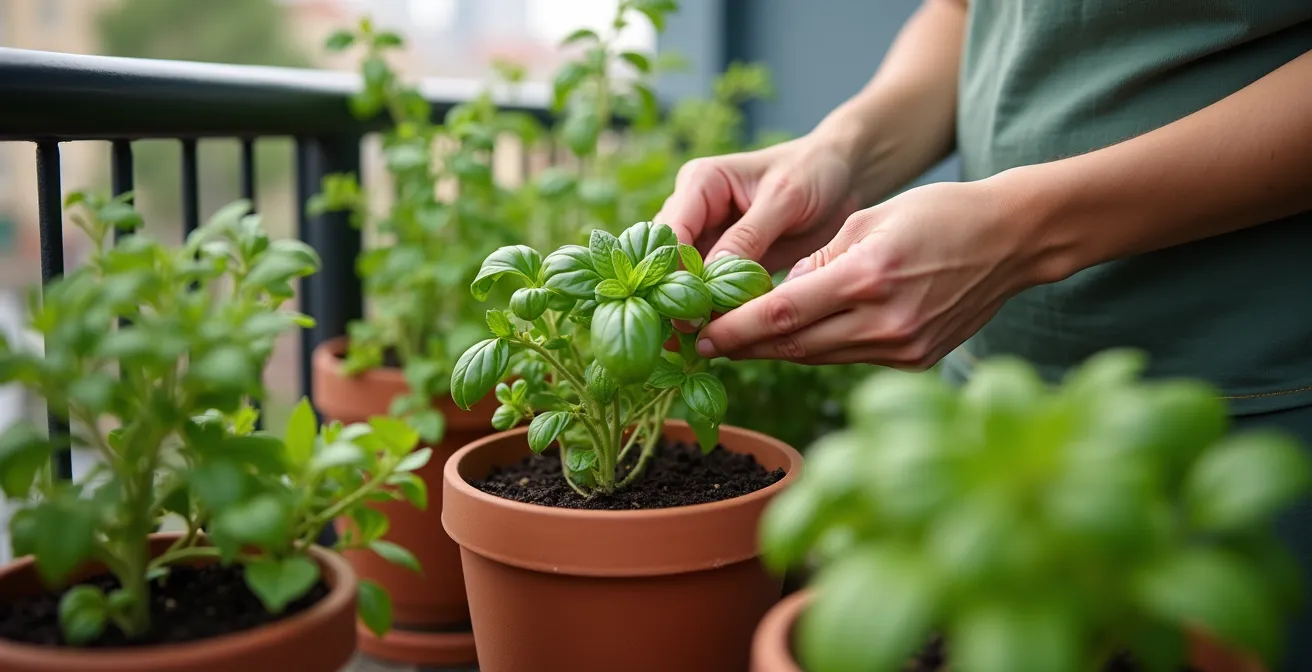
Even the smallest space can become a productive oasis. Vertical planters can maximize your growing area, and simple techniques can yield impressive results. This hands-on approach not only provides the freshest possible ingredients but also deepens your connection to the food cycle and highlights the resources required to produce it. To get the most impact from a small space, focus on these items:
- Cherry tomatoes: One or two productive plants can save you $15-20 per month compared to store prices.
- Salad greens: Use a cut-and-come-again method for a continuous harvest of fresh lettuce and arugula.
- Herbs from cuttings: You can propagate new basil, mint, and rosemary plants for free from store-bought sprigs.
- Snow peas: These grow vertically up a small trellis, making efficient use of limited space.
- Start a worm bin: A small worm composting bin can convert your kitchen scraps into nutrient-rich fertilizer for your container garden, creating a perfect closed-loop system.
How to Find True Local Producers vs Resellers at Farmers Markets ?
Farmers’ markets are idealized as the ultimate connection to local food, but not all stalls are created equal. Many markets have a mix of genuine farmers who grow what they sell and resellers who simply buy produce from a wholesale terminal and mark it up. While resellers can increase variety, buying from them doesn’t support local agriculture in the same way. Your money isn’t going to a local farmer, and the produce is often the same you’d find at a supermarket, having traveled long distances.
Becoming an informed market shopper is a crucial skill for anyone wanting to truly support a regional food system. It requires a bit of detective work and a willingness to engage with the people behind the table. A real farmer will be able to speak with passion and detail about their growing practices, their land, and the challenges of the current season. A reseller, when pressed, will often have vague answers. The key is to look beyond the appearance of the stall and ask the right questions.
Don’t be afraid to start a conversation. Farmers are often proud of their work and happy to share their story with interested customers. This connection is one of the most rewarding aspects of buying direct. By seeking out the true producers, you ensure your dollar is a direct investment in local farmland, local jobs, and the resilience of your regional food economy.
Your Action Plan: The Real Farmer Detective Checklist
- Ask “Where is your farm located?” A real farmer will give a specific town. Follow up with “Are you open for visits?”
- Look for seasonal limitations. A true local farmer won’t have perfect tomatoes in May (in most climates). Resellers often have everything, all the time.
- Check the packaging. Are the vegetables in farm-branded crates or generic, waxy wholesale boxes that look identical from stall to stall?
- Observe the produce. Real farm produce often has some soil still clinging to it. It’s a sign of authenticity, not poor quality.
- Inquire about specific growing practices. Ask, “How did you deal with potato beetles this year?” or “What variety of kale is this?” A farmer will have a specific answer.
Compost vs Fertilizer: Improving Soil Structure Naturally
The conversation about soil health often involves two terms: compost and fertilizer. While they may seem to serve a similar purpose—feeding plants—they function in fundamentally different ways. Understanding this difference is key to appreciating the long-term value of regenerative practices. Synthetic fertilizers are essentially a quick fix. They provide a dose of specific, water-soluble nutrients (typically nitrogen, phosphorus, and potassium) directly to the plant. However, they do nothing to feed the soil itself.
Over-reliance on synthetic fertilizers can create a dependency cycle. They can harm the beneficial microorganisms that form the soil food web, degrade soil structure, and easily wash away into waterways, causing pollution. They are a short-term solution that often contributes to long-term soil degradation.
Compost, on the other hand, is a holistic soil amendment. It is decomposed organic matter teeming with life. When you add compost to your garden, you are not just feeding the plant; you are feeding the entire soil ecosystem. Compost improves soil structure, increases its ability to hold water (making it more drought-resistant), and provides a slow, steady release of a wide range of nutrients. It is a long-term investment in building healthy, resilient, and self-sustaining soil.
As analysis from institutions like the Institute for Functional Medicine shows, the long-term benefits of using organic matter over synthetic inputs are clear.
| Factor | Compost | Synthetic Fertilizer |
|---|---|---|
| Soil Structure | Improves over time | No improvement |
| Water Retention | Increases 20-30% | No effect |
| Microbiome Support | Feeds beneficial microbes | Can harm soil life |
| Long-term Cost | Decreases over time | Constant or increasing |
| Carbon Sequestration | Increases soil carbon | No carbon benefit |
Key takeaways
- The nutritional value of produce is directly linked to the health of the soil it was grown in; prioritize farmers who build soil.
- Direct-to-consumer models like CSAs and buying “ugly” produce offer the best financial value by cutting out intermediaries and reducing farm-level waste.
- Small, consistent actions like DIY alternatives, balcony gardening, and composting have a large cumulative impact on your budget and environmental footprint.
Is the Price of Organic Produce Justified by Nutritional Value ?
The “organic” label is the most visible symbol of sustainable agriculture, but it comes with a price premium that can be a significant barrier. This begs the question: is it worth it? The answer is complex and goes beyond a simple yes or no. From a nutritional standpoint, a large body of research shows that organic crops often contain higher levels of certain beneficial compounds. Meta-analyses have shown that organic produce can have significantly higher concentrations of antioxidants like anthocyanins and flavonols, which are linked to a variety of health benefits.
However, the official “certified organic” label is not the only indicator of quality or sustainable practices. The certification process can be prohibitively expensive, costing anywhere from $500 to $10,000 annually. This cost barrier means many small-scale farmers who practice exceptional, regenerative agriculture simply cannot afford the label.
Case Study: The High Value of Uncertified Regenerative Farms
According to research highlighted by centers for regenerative agriculture like the one at CSU Chico, many small farms that sell at farmers’ markets practice methods that exceed organic standards but remain uncertified due to cost. They focus intensely on building soil health through complex cover cropping, integrated animal grazing, and no-till methods. These farms often sell their produce for 20-30% less than certified organic equivalents, offering consumers what may be the best possible value: superior nutrient density without the premium price of a federal certification.
This highlights the importance of looking beyond the label and connecting with the grower. Ultimately, the higher price of both certified and uncertified regenerative produce reflects a more honest accounting of the cost of food production. As soil biologist Christine Jones argues, it’s conventional produce that is artificially cheap.
Conventional produce is artificially cheap because its environmental and health costs are ‘externalized’—paid by society through water cleanup and healthcare, not at checkout.
– Christine Jones, Soil Biology and Nutrient Density Research
To truly embrace this approach, start small. On your next trip to the grocery store or farmers’ market, choose one strategy from this guide to implement. Ask a vendor about their soil, buy the misshapen pepper, or pick up a pot and some basil seeds. Each small, informed choice is a vote for a healthier, more resilient, and more equitable food system for everyone.