Contrary to popular belief, choosing an ethical wildlife trip isn’t about simply picking a ‘sanctuary’ over a ‘safari’—it’s about becoming a ‘conservation auditor’ who understands the system.
- Your physical presence has an ecological footprint, including disease risks for animals and infrastructure strain, that must be actively managed.
- High costs and strict rules are often signs of a genuine conservation model, not a tourist trap, as they directly fund anti-poaching and habitat protection.
Recommendation: Prioritize operators that demonstrate transparency in their funding, enforce strict no-contact and distance policies, and contribute to a “high-value, low-impact” tourism model.
The desire to witness a lion roaming the savanna or to look into the thoughtful eyes of a mountain gorilla is a powerful call to adventure. For many travelers, it’s a chance to connect with the natural world in a profound way. Yet, this desire is often met with a wave of confusion and ethical anxiety. In a world saturated with “eco-friendly” labels and “conservation-focused” marketing, how can you be sure your journey is helping, not harming, the very creatures you’ve traveled so far to see? The common advice—avoid elephant rides, don’t pet cubs—is a crucial starting point, but it barely scratches the surface.
These simple rules fail to address the complex systems at play. They don’t explain why a high-priced permit might be the most ethical choice, or how your own health can pose a direct threat to a vulnerable animal population. The truth is that genuine conservation is not a simple checklist. It’s a delicate balance of biology, economics, and community engagement. The key isn’t to blindly follow a list of “dos and don’ts,” but to adopt a new mindset: that of a conservation auditor. This means learning to ask the right questions and to recognize the signs of a truly sustainable operation.
This guide moves beyond the platitudes to empower you with that understanding. We will deconstruct the hidden mechanics of ethical wildlife tourism, from the science behind no-flash photography to the economic necessity of anti-poaching fees. By understanding the “why” behind the rules, you can transform from a passive tourist into an active, informed partner in conservation, ensuring your travel dollars genuinely support a future where wildlife can thrive.
To navigate this complex landscape, this article breaks down the essential components you need to audit before and during your trip. From understanding disease transmission to verifying your insurance, each section provides the knowledge to make a truly responsible choice.
Summary: A Guide to Ethical Wildlife Experiences
- Why You Must Wear a Mask When Visiting Mountain Gorillas?
- Flash Photography and Wildlife: Why You Could Blind Nocturnal Animals?
- The Anti-Poaching Fee: Why Expensive Park Permits Are Necessary?
- Malaria Pills vs Spray: What Is Essential for a Rainforest Trek?
- Optimizing the Great Migration: When to Book to Actually See the Crossing?
- The Elephant Ride Trap: How to Spot Unethical Animal Tourism?
- Phytoncides: Why Breathing Forest Air Boosts Your Immune System?
- How to Prepare for Extreme Sports Travel Without Voiding Your Insurance?
Why You Must Wear a Mask When Visiting Mountain Gorillas?
The rule to wear a mask when visiting great apes feels like a recent precaution, but for conservationists, it’s a long-standing principle rooted in a serious biological threat: reverse zoonosis. This is the transmission of human diseases to animals. Because we share approximately 98% of our DNA with gorillas and chimpanzees, they are highly susceptible to our respiratory illnesses, from the common cold to influenza and coronaviruses. An infection that is merely an inconvenience for a human can be catastrophic for a gorilla population with no natural immunity.
The stakes are incredibly high. A single disease outbreak could wipe out an entire family group, undoing decades of conservation work. The ethical responsibility of a visitor is not just to observe, but to actively protect. This is why protocols are so strict. Operators will enforce a minimum distance (often 7 to 10 meters), limit viewing time to one hour, and require health screenings. Turning your head to cough or sneeze, even with a mask on, is a non-negotiable rule.
The COVID-19 pandemic highlighted this vulnerability on a global scale. A case study from Uganda shows how the country immediately tightened its protocols, mandating mask-wearing and increasing viewing distances. These measures were critical in preventing disease transmission to great apes, even as the collapse in tourism meant tourism revenue dropped to 10-20% of pre-pandemic levels. This demonstrates the fragile link between tourism, funding, and animal health. Your compliance with these health rules is a direct contribution to conservation, proving you understand that the privilege of seeing these animals comes with a profound duty of care.
Flash Photography and Wildlife: Why You Could Blind Nocturnal Animals?
Capturing the perfect wildlife photo is a highlight for many travelers, but the impulse to use a flash, especially at night, can have severe and lasting consequences for animals. Nocturnal species, from leopards to owls and bushbabies, have eyes that are exquisitely adapted to low-light conditions. Their pupils are larger and their retinas are packed with light-sensitive rod cells, often including a reflective layer called the tapetum lucidum which causes “eyeshine.” A sudden, bright flash of artificial light overwhelms these delicate systems, causing temporary blindness and disorientation that can last for several minutes.
In that critical window of blindness, an animal is left completely vulnerable. A predator may miss its chance to hunt, effectively going hungry. A prey animal may be unable to spot an approaching threat or navigate its escape, making it an easy target. Repeated exposure from multiple tourist vehicles can lead to chronic stress and even cause animals to abandon their dens or nesting sites altogether. This isn’t just a minor disturbance; it’s a direct interference with the fundamental survival behaviors of wildlife. An ethical operator will have a strict no-flash policy and will not hesitate to enforce it.
Fortunately, responsible photography is entirely possible. The key is to work with the available light, not fight against it.
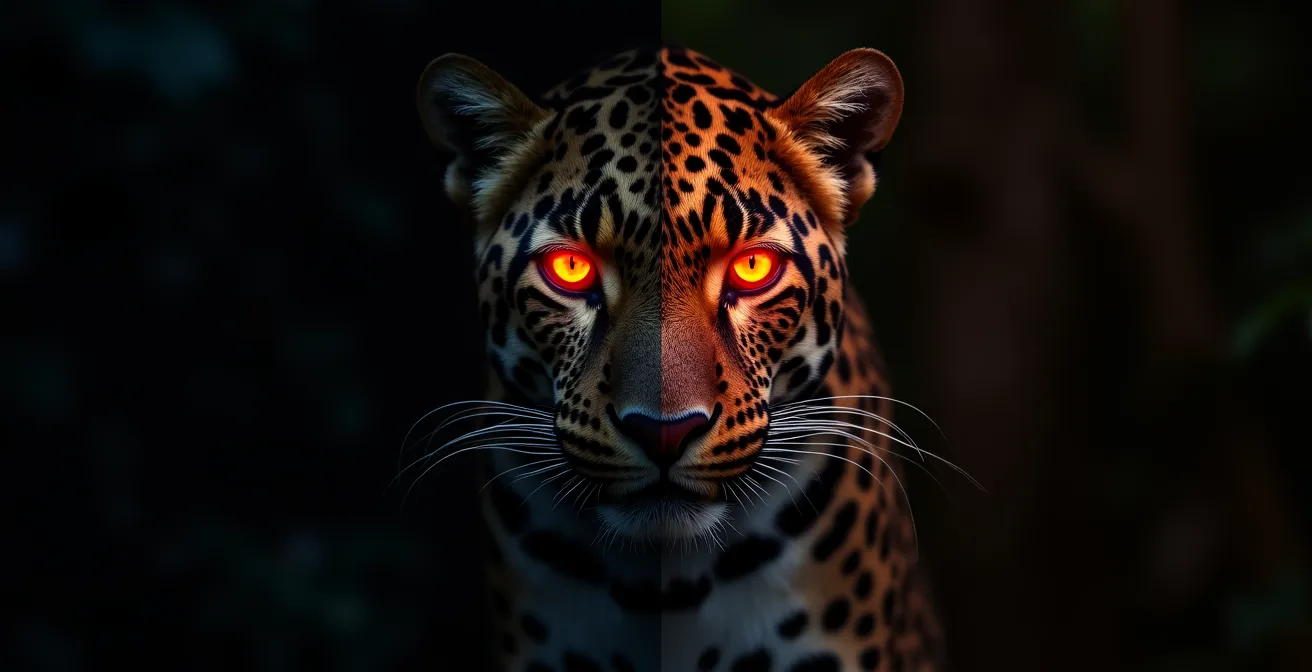
As this image illustrates, the ethical alternative is often a soft, red-filtered light. Many nocturnal animals do not perceive red light well, so it allows for observation without disrupting their natural vision or behavior. Furthermore, modern cameras offer incredible solutions. Using a high ISO setting (up to 12800 or more), a “fast” lens with a wide aperture (like f/1.4 or f/2.8), and proper stabilization techniques allows for stunning images in near darkness. The most ethical approach of all is recognizing when to put the camera down and simply appreciate the moment, prioritizing the animal’s well-being over a photograph.
The Anti-Poaching Fee: Why Expensive Park Permits Are Necessary?
The initial sticker shock of a gorilla trekking permit or a prime national park entry fee can be startling. It’s easy to wonder where all that money goes. However, from a conservation biologist’s perspective, these high costs are not a bug; they are a feature—and a necessary one at that. They are the engine of the “High-Value, Low-Impact” conservation model, an economic strategy designed to maximize protection while minimizing human disturbance. A high permit price intrinsically limits the number of visitors, reducing stress on the ecosystem and ensuring a more intimate, less crowded experience for those who do come.
As Stephan Brückner, a pioneer in responsible tourism, states, this model is about far more than just fundraising. He notes, “The ‘High-Value, Low-Impact’ conservation model isn’t just about raising money, but about limiting human footfall, reducing stress on the ecosystem, and ensuring a better, less-crowded experience that can be sustained long-term.” This philosophy acknowledges that a living, thriving animal is an economic asset that far outweighs its value to a poacher. Indeed, conservation economics research demonstrates that a single living elephant can be worth over $1.6 million in tourism revenue over its lifetime.
So, where does the money from your “anti-poaching fee” actually go? It is the lifeblood of the entire conservation operation. It pays for rangers’ salaries, training, and equipment; it funds community development projects that provide alternative livelihoods to poaching; and it supports the technology and research needed to monitor and protect wildlife populations.
This table breaks down how a typical park permit fee is allocated, transforming your tourism dollars into tangible conservation action.
| Allocation Category | Percentage | Impact Example |
|---|---|---|
| Anti-poaching rangers & training | 35-40% | Salaries for 65,000+ permanent conservation staff |
| Technology & equipment | 20-25% | GPS collars, drones, camera traps |
| Community development | 15-20% | Alternative livelihoods to poaching |
| Vehicle & infrastructure | 10-15% | Patrol vehicles, ranger stations |
| Research & monitoring | 10-15% | Wildlife population studies |
Malaria Pills vs Spray: What Is Essential for a Rainforest Trek?
Preparing for the health challenges of a rainforest trek goes far beyond the personal choice between malaria pills and insect repellent. Your medical preparedness is an integral part of your ethical footprint as a traveler. Arriving in a remote conservation area without the proper vaccinations or prophylactic medications is not just a personal risk; it’s a potential burden on the fragile local infrastructure. A medical emergency or evacuation diverts critical resources—rangers, vehicles, and funds—away from conservation activities like anti-poaching patrols.
The U.S. Centers for Disease Control and Prevention (CDC) frames this as an ethical obligation. Their guidelines for travel to sensitive areas like African safari destinations are comprehensive. For activities like gorilla trekking, they recommend a suite of vaccinations including measles, polio, and influenza, not only to protect the traveler but also to prevent transmission to vulnerable wildlife. As the CDC emphasizes, medical preparedness is an ethical responsibility, as preventable illnesses and subsequent evacuations place an undue strain on limited local resources and disrupt conservation efforts.
Beyond personal health, the very products you use have an environmental impact. Traditional insect repellents containing DEET can be harmful to amphibians and other aquatic life when it washes into streams and rivers. Similarly, single-use plastic from pill packets and medical supplies contributes to waste in areas with limited disposal facilities. An ethically-minded traveler considers this broader ecological footprint by opting for eco-friendly alternatives. This includes choosing repellents with Picaridin or Oil of Lemon Eucalyptus, using biodegradable soaps, pre-treating clothing with permethrin before travel instead of spraying in the field, and meticulously packing out all medical waste. This level of preparation shows a deep respect for the ecosystem you are privileged to enter.
Optimizing the Great Migration: When to Book to Actually See the Crossing?
Witnessing the Great Migration, particularly a dramatic river crossing, is a bucket-list experience. However, the traditional approach of booking based on a fixed monthly calendar is becoming increasingly obsolete and ethically questionable. Climate change is disrupting historic rain patterns across the Serengeti-Mara ecosystem, making the wildebeests’ movements more unpredictable than ever. Ethical operators have moved away from selling guaranteed sightings on specific dates. Instead, they rely on real-time intelligence from local scouts, satellite data, and a deep understanding of the landscape to position their guests responsibly.
The “optimization” of this experience is not about being at the busiest crossing point, but about finding a location that allows for respectful observation without contributing to a wildlife traffic jam. In popular national park areas, a potential crossing can attract a frantic scrum of vehicles, with drivers jostling for position, revving engines, and creating a wall of steel that can stress the animals and even deter them from crossing. This is the antithesis of ethical viewing. In contrast, many private conservancies have much stricter rules. For example, data from East African conservancies shows a maximum of 5 vehicles per sighting is often enforced, compared to 20 or more in public areas. This “less is more” approach guarantees a better, more natural experience for the visitor and, most importantly, prioritizes the animals’ welfare.
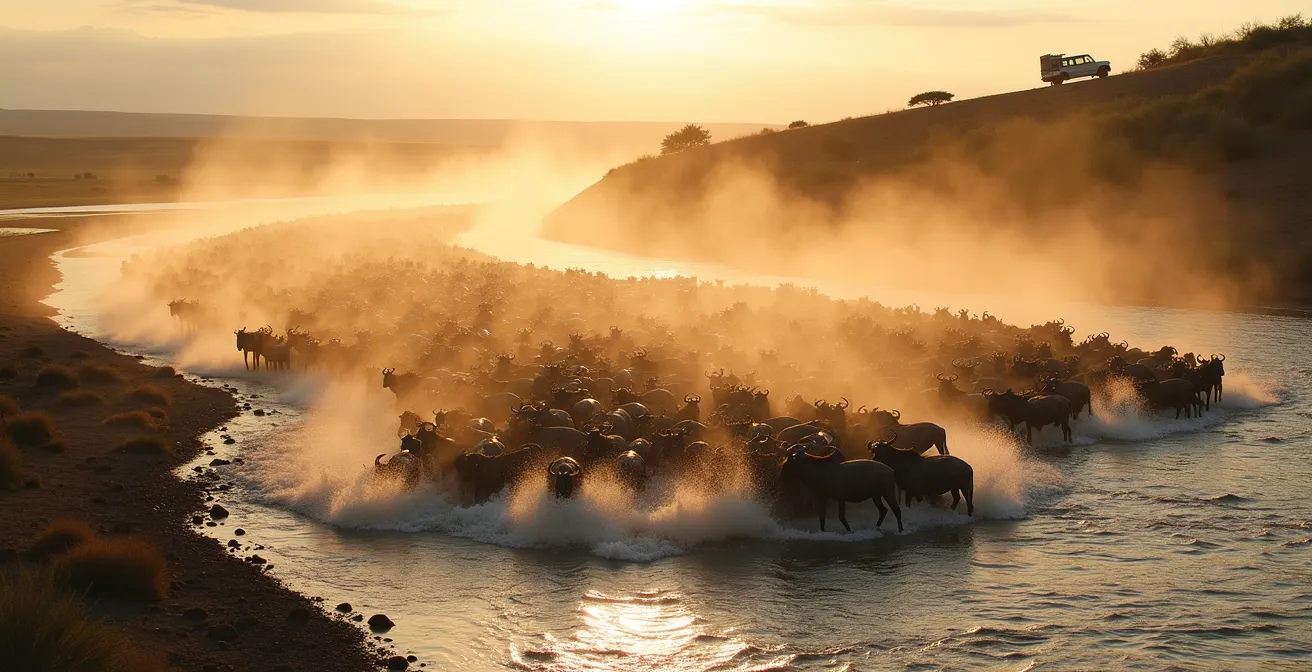
The goal is to be a quiet observer on the sidelines of a natural spectacle, not a disruptive force at its center. Choosing an operator who prioritizes smaller groups, uses private conservancies, and transparently admits that crossings are never guaranteed is a hallmark of an ethical choice. They understand that the migration operates on its own schedule, and the privilege lies in bearing witness to it, whenever and however it happens, from a respectful distance.
The Elephant Ride Trap: How to Spot Unethical Animal Tourism?
The “elephant in the room” of wildlife tourism is often, quite literally, an elephant. The industry has become more aware of the cruelty behind elephant riding and performances, but exploitative practices have simply evolved, becoming more subtle and often disguised under the benevolent banner of a “sanctuary” or “orphanage.” The modern traveler, or “conservation auditor,” must learn to see past the marketing and identify the universal red flags that signal an operation built for profit, not protection.
A core principle of genuine conservation is a minimal or no-contact approach. Wild animals are not props for a selfie. Any facility that encourages or allows riding, petting, feeding, or walking with animals (especially predators like lions) is almost certainly not a legitimate sanctuary. As one study on the topic notes, a reputable organization’s primary goal should be to rescue, rehabilitate, and release. Those that maintain a hands-off policy are usually keeping this principle in mind. A lion cub which has been handled by hundreds of humans can almost never be successfully released back into the wild. The presence of many young animals, often without their mothers, is a major warning sign of a breeding operation that feeds the entertainment industry.
To help you distinguish genuine conservation from clever marketing, here is a checklist of common red flags. If a facility exhibits several of these traits, you should treat it with extreme skepticism.
Your Action Plan: Universal Red Flags for Unethical Wildlife Tourism
- Direct contact encouraged: Any opportunity to pet, ride, bathe, or feed a wild animal is a primary warning sign.
- Unnatural behaviors: Animals are made to perform tricks, paint, or behave in ways they would not in the wild for visitor entertainment.
- Photo props: Animals are restrained, sedated, or used as props for paid photo opportunities.
- Breeding programs without release: The facility constantly has a supply of baby animals for petting, with no clear, documented program for releasing them into protected wild areas.
- Vague conservation claims: The organization talks about “conservation” but cannot provide specific details, scientific partners, or transparent data on where their money goes and which wild populations they support.
Key Takeaways
- Ethical tourism requires an “auditor” mindset, not just a checklist. You must understand the ‘why’ behind the rules.
- High fees are often a good sign, directly funding a “High-Value, Low-Impact” model that supports anti-poaching and limits ecosystem stress.
- Any facility that encourages direct contact with wild animals (petting, riding, selfies) is almost certainly an entertainment venue, not a genuine sanctuary.
Phytoncides: Why Breathing Forest Air Boosts Your Immune System?
While the focus of a wildlife trip is often on the animals, the environment itself offers profound benefits. The concept of “forest bathing” (Shinrin-yoku) originates from the understanding that simply being in a forest can improve well-being. A key mechanism behind this is the inhalation of phytoncides, which are antimicrobial airborne organic compounds released by plants and trees to protect themselves from pests and disease. When we breathe them in, these compounds have been shown to stimulate the activity of our own Natural Killer (NK) cells, a type of white blood cell that plays a vital role in our immune response.
However, the full benefit of this natural immunotherapy is only realized in a truly healthy, thriving, and biodiverse ecosystem. A monoculture pine plantation does not have the same effect as a rich, old-growth rainforest. The complexity and health of the plant life directly correlate to the complexity and potency of the phytoncides in the air. This is where ethical tourism and personal well-being intersect beautifully. By choosing to visit and support conservation projects that protect large, intact, and biodiverse habitats, you are not only helping wildlife—you are also immersing yourself in an environment optimized for your own health.
The success of a conservation-focused operation can be measured by its biodiversity. When an area is well-managed and protected from poaching and encroachment, a stunning variety of life can flourish. For instance, some private eco-tourism ranches demonstrate that responsible management can create incredible havens for biodiversity. It is not uncommon for a single, well-managed property to host a vast array of species. This rich tapestry of life is the very engine that produces the healthy atmosphere you breathe. Your choice to support these places is a vote for the preservation of these complex, life-giving systems.
How to Prepare for Extreme Sports Travel Without Voiding Your Insurance?
A final, often-overlooked component of being a responsible wildlife traveler lies in the fine print of your travel insurance policy. For activities deemed “extreme” or “adventure”—a category that often includes trekking in remote jungles, diving, or even open-vehicle safaris—insurers have become increasingly stringent. A critical and growing requirement is that these activities must be conducted with a fully licensed and accredited operator. Choosing an unaccredited, cut-rate operator to save money could have a devastating financial consequence: in the event of an accident, your insurer could refuse to cover your claim.
This is not just bureaucratic red tape; it’s a risk management strategy that aligns perfectly with ethical tourism. Accreditation from recognized bodies like The International Ecotourism Society (TIES), the Rainforest Alliance, or Fair Trade Tourism serves as a third-party verification that an operator meets specific standards for safety, environmental responsibility, and staff training. Insurers rely on these certifications as a proxy for professionalism and safety. A case study of policies for adventure travel reveals that major insurers are increasingly requiring proof of accredited operator usage for claims, with some policies explicitly excluding any incident occurring at an unlicensed or uncertified facility.
As a conservation auditor, you can use this to your advantage. Before booking, you should actively verify an operator’s credentials and cross-reference them with your insurance policy. Ask the operator for proof of their certifications and liability insurance. Then, contact your insurance provider to get written confirmation that your policy covers the specific activities with that specific type of certified operator. This due diligence serves a dual purpose: it protects you financially and simultaneously filters out the less reputable, potentially unsafe, and unethical operators who have not invested in proper accreditation. It turns your insurance policy into one final, powerful tool for promoting responsible practices in the adventure travel industry.
Your next adventure is an opportunity to vote with your wallet for a future where wildlife thrives. By applying these principles, you can move beyond the surface-level claims of “eco-tourism” and make a choice that is truly beneficial for the animals, the local communities, and yourself. Start planning your trip not just as a tourist, but as a conservation partner, by using this framework to vet your next operator and champion genuine conservation.