The key to winning over picky eaters isn’t hiding vegetables, it’s mastering the science of flavor to make healthy ingredients genuinely crave-worthy.
- Fat is not the enemy; it’s a critical vehicle for delivering flavor and creating satisfying textures.
- Bitterness, saltiness, and umami aren’t just tastes; they are chemical tools you can use to build complex, delicious dishes from simple, healthy foods.
Recommendation: Stop thinking like a parent hiding broccoli and start thinking like a flavor scientist—using fat, acid, and umami to transform your kitchen into a laboratory of deliciousness.
The dinner table can often feel like a battlefield, with you on one side armed with a plate of nutrient-rich vegetables and a picky eater on the other, defenses raised. The conventional wisdom for years has been a strategy of stealth and deception: shredding zucchini into spaghetti sauce, blending spinach into fruit smoothies, and generally treating vegetables like a secret to be kept. While well-intentioned, this approach operates on the flawed premise that healthy food is inherently bland and must be disguised to be consumed.
But what if the problem isn’t the vegetables themselves, but our approach to cooking them? What if, instead of hiding healthy ingredients, we could use the fundamental principles of flavor science to make them genuinely, irresistibly indulgent? This isn’t about tricks or camouflage. It’s about understanding *why* certain combinations work, transforming the perception of healthy food from a chore to a treat. It’s about leveraging fat, acid, umami, and salt with the precision of a chef.
This guide moves beyond the platitudes and into the kitchen laboratory. We will explore the chemical reasons fat acts as a flavor vehicle, deconstruct the textural trade-offs of popular health swaps, and uncover how to build “meaty” depth in plant-based dishes. By embracing your inner flavor scientist, you can re-engineer your family’s meals to be both nutritious and deeply satisfying, ending the mealtime wars for good.
To guide you on this culinary journey, this article breaks down the core principles of flavor science. The following sections will equip you with the knowledge and techniques to transform even the most skeptical palate.
Summary: The Flavor Scientist’s Guide to Indulgent Healthy Cooking
- Why Fat Is the Vehicle for Flavor: Cooking Vegetables with Ghee or Oil ?
- Cauliflower Pizza Crust vs Regular: Is the Texture Trade-Off Worth the Calorie Drop ?
- Miso and Mushrooms: How to Add Meaty Depth to Plant-Based Dishes ?
- The Monk Fruit Mistake: Baking with Natural Sweeteners Without the Aftertaste
- When to Salt Your Food: The Chemical Difference Between Cooking and Finishing ?
- Why Bitter Greens Need Acid to Be Palatable and Digestible ?
- Fat vs Sugar: Which Macronutrient Is Actually the Enemy of Heart Health ?
- Why Switching to Home Cooking Saves You $200/Month ?
Why Fat Is the Vehicle for Flavor: Cooking Vegetables with Ghee or Oil ?
For decades, fat has been unfairly demonized, leading many health-conscious cooks to steam vegetables into bland, watery submission. This approach ignores a fundamental rule of culinary science: fat is the primary vehicle for flavor. Many of the aromatic compounds that make food taste delicious are fat-soluble, meaning they only release their full potential when dissolved in lipids like oil, butter, or cheese. Without fat, these flavors can’t properly coat the tongue, leaving healthy ingredients tasting flat and uninspired.
Think about roasted broccoli. When roasted with olive oil, its edges become crisp and caramelized, and its flavor deepens. The oil helps transfer heat efficiently (the Maillard reaction) and carries the toasted, nutty notes to your palate. The same principle applies when adding Parmesan cheese to whole wheat pasta with vegetables; the fat in the cheese amplifies the garlic and fresh veggie flavors, creating a dish that feels indulgent, not restrictive.
The strategy isn’t to drench food in fat, but to use it strategically. For picky eaters who are often sensitive to texture as much as taste, fat provides a satisfying mouthfeel that turns vegetables from a challenge into a comfort. Dishes like spinach and feta stuffed chicken or a creamy butternut squash mac ‘n’ cheese work because the veggies are integrated into a rich, flavorful matrix. The fat acts as a bridge, making the unfamiliar (the vegetable) more approachable by pairing it with a sensation they already love (the creamy texture).
Cauliflower Pizza Crust vs Regular: Is the Texture Trade-Off Worth the Calorie Drop ?
The rise of cauliflower pizza crust is a perfect case study in the modern pursuit of healthy indulgence. It promises the pleasure of pizza with fewer carbs and calories, and as a gluten-free option, it’s a fantastic innovation. However, any ingredient swap involves a sensory trade-off, and the key to success with picky eaters is to manage expectations and understand what you’re gaining versus what you’re giving up.
A traditional flour crust offers a satisfying chew and a crispy, airy structure from gluten development. A cauliflower crust, held together by cheese and egg, has a denser, more tender, and slightly moist texture. It can be delicious, but it’s different. For someone expecting a classic pizza experience, this difference can be jarring. The question isn’t whether it’s “good,” but whether the textural compromise is worth the nutritional benefit for your family. As one enthusiast noted, “This is a perfect way to indulge in pizza without any guilt. It’s also great if you’re gluten-free.”
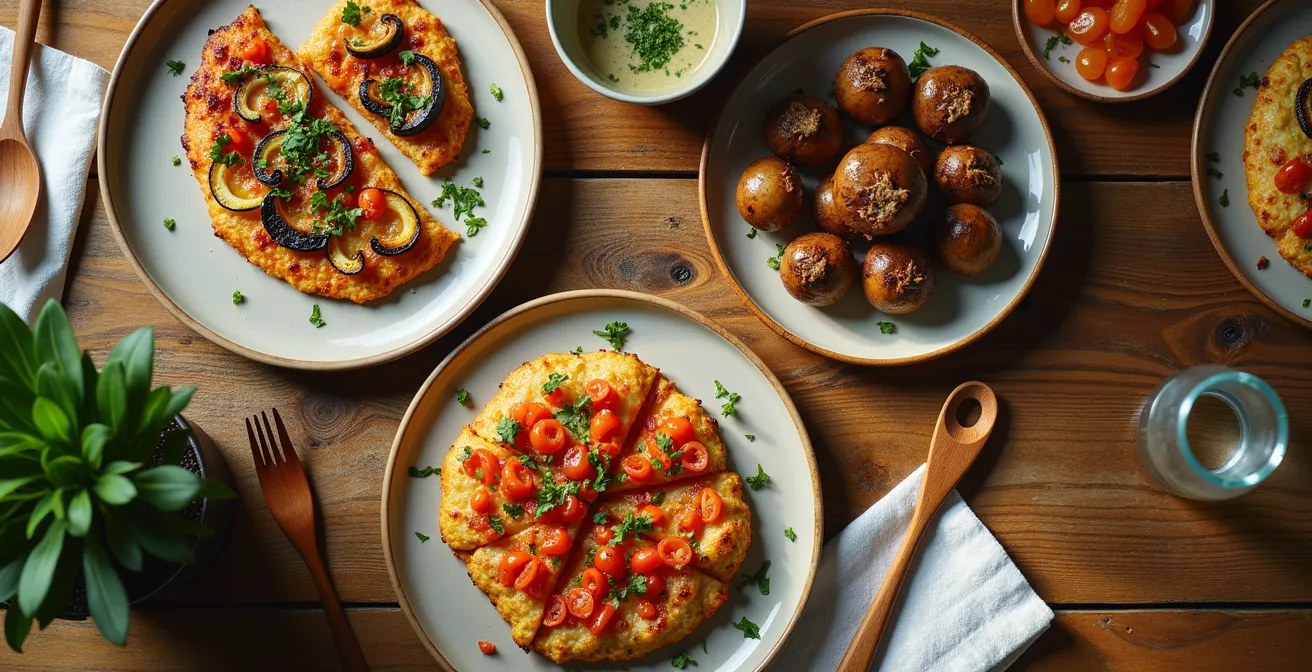
This close-up view highlights the unique texture of a cauliflower crust—golden and crispy on the edges, yet tender within. Understanding this visual and textural difference is key to presenting it successfully.

Instead of a direct swap, sometimes a better approach is to reframe the dish entirely. Creating pizza-like experiences with different bases avoids the direct comparison and potential disappointment. The following table from Aspen Valley Hospital outlines some creative alternatives that can appeal to picky eaters by focusing on fun and novelty rather than imitation.
| Type | Preparation | Kid Appeal |
|---|---|---|
| Mini Pizzas | Whole wheat naan or yogurt dough base | Fun size, customizable toppings |
| Pizza Boats | Zucchini hollowed and filled | Novel presentation |
| Regular Pizza | Traditional dough | Familiar taste and texture |
Miso and Mushrooms: How to Add Meaty Depth to Plant-Based Dishes ?
One of the biggest challenges in making plant-based meals satisfying is recreating the savory, complex depth known as umami—often described as the fifth taste. This “meaty” flavor is abundant in cooked meats but can feel absent in vegetarian dishes, leaving them tasting incomplete to many palates. This is where ingredients like miso and mushrooms become essential tools for the flavor scientist. They are powerful sources of umami that can build a rich, savory foundation in any dish.
Miso, a fermented soybean paste, is packed with glutamates, the compounds responsible for umami. A spoonful added to a soup, glaze, or sauce provides an instant boost of savory complexity. Mushrooms, especially when seared at high heat, undergo the Maillard reaction and develop their own deep, meaty flavors. Combining these two creates an “umami architecture,” layering different savory notes to build a profile that rivals meat in its satisfaction.
This technique is far more effective than simply hiding vegetables. While some studies show that a slow cooker hidden vegetable pasta sauce proves that five or more vegetables can be successfully incorporated, this relies on masking. Building umami, by contrast, is about enhancement. It makes the dish itself more crave-worthy, teaching the palate to appreciate new, complex flavors found in international cuisines like chicken teriyaki or vegetable stir-fries.
Action Plan: Building Umami Architecture
- Create a Base: Start with a powerful umami source. Mix soy sauce, a touch of honey or brown sugar, rice vinegar, ginger, and garlic to form a versatile sauce base that delivers an instant savory punch.
- Layer for Depth: Don’t rely on a single ingredient. Combine different umami sources. For example, use a miso-based marinade on mushrooms before searing them at high heat to create multiple layers of flavor.
- Master the Sear: Use high, dry heat when cooking vegetables like mushrooms or tofu. This promotes the Maillard reaction, the chemical process that creates the browned, complex, and savory flavors essential for meaty depth.
- Add a Savory Garnish: Finish your dish with a final umami touch, such as a sprinkle of nutritional yeast (which has a cheesy, nutty flavor) or a few drops of high-quality sesame oil.
- Balance with Acid: A squeeze of lime or a splash of vinegar at the end of cooking will brighten the umami flavors, making them feel more vibrant and less heavy on the palate.
The Monk Fruit Mistake: Baking with Natural Sweeteners Without the Aftertaste
In the quest to reduce sugar, many home cooks turn to natural, zero-calorie sweeteners like monk fruit or stevia. While they are excellent for managing sugar intake, they can come with a significant drawback for the picky eater: a distinct, often metallic or licorice-like aftertaste. This occurs because the molecules in these sweeteners bind to our taste receptors differently than sucrose (table sugar). For a sensitive palate, this unfamiliar sensation can ruin an otherwise perfect baked good.
The “monk fruit mistake” is believing a one-to-one swap for sugar will go unnoticed. A better strategy is to use nature’s own sweeteners: whole fruits. As one recipe developer found, a successful smoothie “feels like you’re indulging in a decadent treat, but it’s actually super healthy! I use no added sugar – and instead make it naturally sweet from the fruit.” This approach works because the sweetness from fruit like bananas, dates, or mangoes is delivered alongside fiber, water, and complex flavors that the palate perceives as natural and complete.
Case Study: The “Don’t Taste Healthy” Banana Muffin
Spoon University highlights a recipe for one-bowl banana muffins that perfectly illustrates this principle. Instead of refined sugars and white flour, the muffins rely on the natural sweetness of ripe bananas and the richness of Greek yogurt. Oats provide a hearty texture. The result is a muffin that is nutrient-dense but, crucially, doesn’t carry the stigma of “healthy” food. As the author promises, “Don’t worry, these don’t taste healthy.” This success hinges on using whole ingredients to provide sweetness and texture, bypassing the aftertaste issue of many refined sugar substitutes entirely.
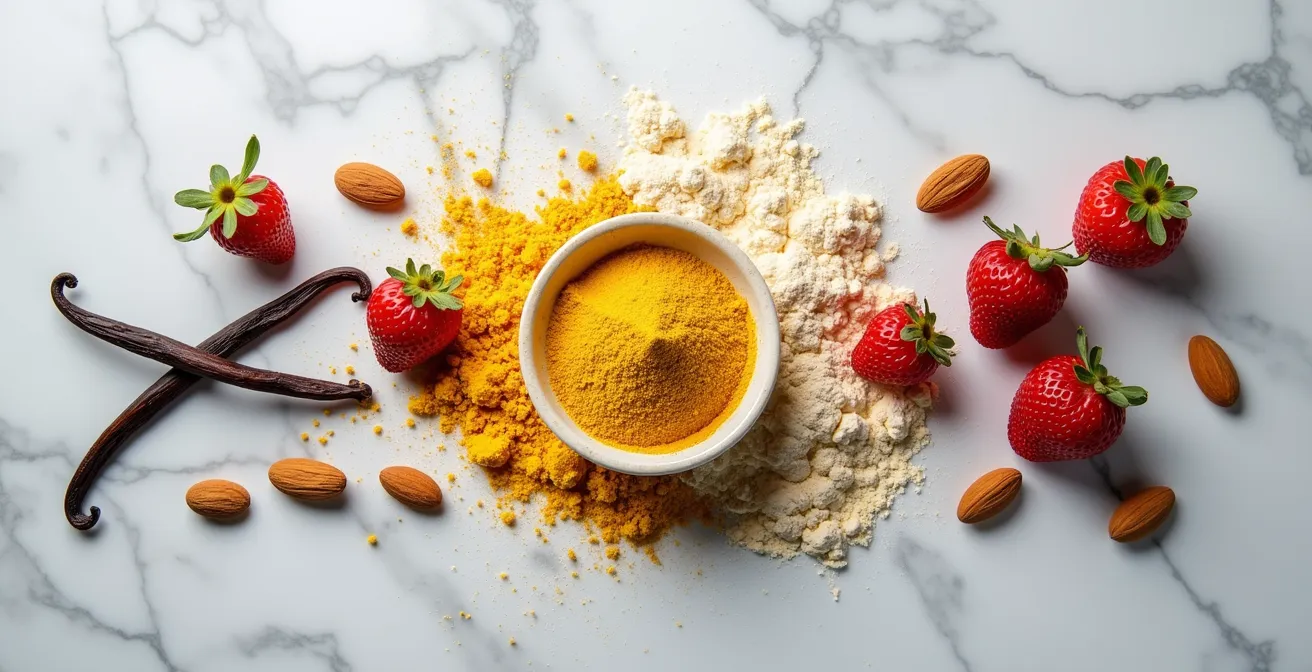
This flat lay of natural baking ingredients visually represents the shift from processed sweeteners to whole, flavorful components like fruit and alternative flours.
By using the inherent sweetness of whole foods, you not only avoid the chemical aftertaste but also add valuable nutrients and fiber, making the final product more satisfying and genuinely healthier.
When to Salt Your Food: The Chemical Difference Between Cooking and Finishing ?
Salt is arguably the most powerful tool in a cook’s arsenal, yet it’s often used as an afterthought. Understanding the chemical difference between salting *during* cooking and salting at the *end* can dramatically elevate a dish from bland to brilliant. It’s not just about making things “salty”; it’s about using salt to manipulate texture and amplify flavor on a molecular level.
When you salt food early in the cooking process, you’re using it as a chemical agent. For vegetables like zucchini or eggplant, an early sprinkle of salt draws out excess water through a process called osmosis. This concentrates their flavor and helps them brown rather than steam. In doughs and batters, salt controls yeast fermentation and strengthens gluten structure. This “cooking salt” integrates into the food, seasoning it from within and fundamentally changing its composition.
Finishing salt, on the other hand, is all about sensory impact. A sprinkle of flaky sea salt on a finished steak, a chocolate chip cookie, or a slice of avocado doesn’t have time to dissolve. Instead, it sits on the surface, providing a bright burst of salinity and a delightful textural crunch. This contrast awakens the palate and makes the flavors of the food pop. For picky eaters, this textural element can be just as appealing as the taste itself. A balanced dish requires both types of salting. According to nutritional data showing that proper salt balance is key, a well-designed kid-friendly meal might contain around 651mg of sodium, used strategically for both chemistry and taste.
Why Bitter Greens Need Acid to Be Palatable and Digestible ?
Bitter greens like kale, arugula, and spinach are nutritional powerhouses, but their characteristic bitter taste can be a major hurdle for picky eaters. Bitterness is an evolutionary signal for potentially toxic compounds, so our brains are hardwired to be wary of it. The secret to overcoming this aversion isn’t to mask the flavor, but to *balance* it. The most effective tool for this is acid.
Acidic ingredients like lemon juice, vinegar, or even acidic fruits like mango and strawberries chemically alter our perception of bitterness. The acid brightens the overall flavor profile and provides a counterpoint that makes the bitterness less pronounced and more complex. Think of it as a palatability matrix: bitterness on its own is harsh, but when balanced with acid, fat, and a touch of salt, it becomes an enjoyable part of a sophisticated flavor profile. Massaging kale with lemon juice and olive oil doesn’t just add flavor; it also uses acid and friction to break down the tough cellulose, making the leaves more tender and easier to digest.
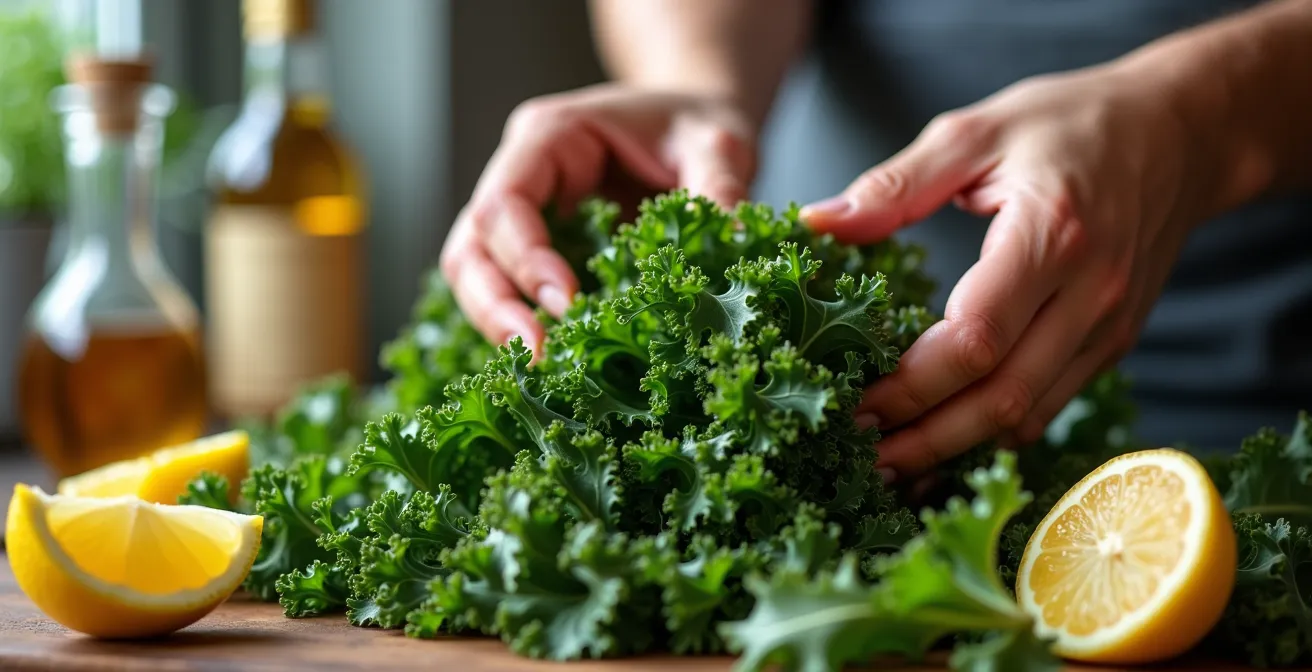
The hands-on act of massaging kale with lemon juice is a perfect visual for this scientific principle, showing the transformation from tough and bitter to tender and palatable.
Case Study: The Trojan Horse Smoothie
A great example of this principle in action is the “hidden broccoli” smoothie. One parent explains, “Yes, I put broccoli in a smoothie. But the mango and banana that I add make it taste sweet and fruity.” This works not just because of the sweetness, but because mango and banana are both acidic fruits. The acid effectively neutralizes the slightly bitter, sulfuric notes of the raw broccoli. The parent notes, “I’ve served this to my son’s friends and they had no idea they were drinking broccoli.” It’s a successful strategy because it uses flavor science to create a balanced, delicious result where the fruit doesn’t just mask the vegetable—it chemically harmonizes with it.
Fat vs Sugar: Which Macronutrient Is Actually the Enemy of Heart Health ?
For years, the dietary villain was fat. This led to a boom in “low-fat” products that, in order to remain palatable, were often loaded with sugar and refined carbohydrates. We are now understanding that this trade-off may have been a mistake. The conversation around heart health is shifting, and the real enemy appears to be not fat itself, but excessive processed sugar.
Healthy fats, especially those from whole-food sources like avocados, nuts, seeds, and oily fish, are essential for brain function, hormone production, and absorbing fat-soluble vitamins. They also play a crucial role in satiety, the feeling of fullness that prevents overeating. A meal rich in healthy fats and protein will keep you feeling satisfied far longer than a high-carb, low-fat meal, which can lead to energy crashes and cravings for more sugar.
The problem is that sugar is often hidden in foods we perceive as healthy. For instance, a commercial smoothie analysis reveals that many popular chains sell products with as much sugar as a dessert. A homemade smoothie with whole fruit, Greek yogurt (which contains fat and protein), and a handful of spinach is a nutritionally superior choice. The focus for picky eaters shouldn’t be on eliminating fat, but on providing the right kinds of fats while minimizing added sugars. This approach not only supports long-term health but also creates more flavorful and satisfying meals.
Key Takeaways
- Flavor is science, not magic. Using fat, acid, salt, and umami strategically can chemically transform healthy ingredients into delicious meals.
- Don’t just hide vegetables; enhance them. Building flavor creates a positive association, while hiding reinforces the idea that healthy food is undesirable.
- Ingredient swaps involve a “sensory trade-off.” Be mindful of changes in texture and mouthfeel when replacing traditional ingredients with healthier alternatives.
Why Switching to Home Cooking Saves You $200/Month ?
While the focus of this guide has been on flavor science, the application of these principles at home yields another powerful benefit: significant financial savings. The common refrain from busy families is that takeout or restaurant meals are a necessary convenience. However, by mastering a few key techniques, home cooking can become not only healthier and tastier but also dramatically more affordable.
Restaurant and pre-packaged meals are engineered for hyper-palatability, often using excessive amounts of sugar, unhealthy fats, and sodium. When you cook at home, you control the ingredients. You can apply the principles of flavor science—using a small amount of ghee for richness, a splash of vinegar for brightness, or seared mushrooms for umami—to create deep, satisfying flavor without the high cost to your health or wallet. Research from Johns Hopkins University demonstrates that when people cook most of their meals at home, they consume fewer carbohydrates, less sugar, and less fat than those who rely on outside sources.
The key to making this sustainable is strategy. Instead of ordering takeout, you can make healthier, freezer-friendly versions of favorites like homemade pizza pockets or air fryer chicken nuggets. Batch cooking and freezing portions ensures that a quick, delicious, and healthy meal is always on hand, eliminating the temptation of last-minute expensive options. This shift in habit doesn’t just save an estimated $200 per month; it transforms your kitchen from a place of stressful meal prep into a laboratory for creating healthy, indulgent food your whole family will love.
Start today by choosing one principle from this guide—whether it’s adding a squeeze of lemon to your greens or searing mushrooms before adding them to a sauce—and turn your next meal into a delicious experiment.
Frequently asked questions about making healthy food taste indulgent
Are all fats bad for health?
No, not at all. It’s best not to villainize any of the macronutrients. No foods are inherently bad for you, apart from those altered by humans. There’s nothing wrong with carbs, fat, or protein. It’s just all about getting the moderation right and choosing high-quality, whole-food sources whenever possible.
How do healthy fats improve meal satisfaction?
Healthy fats play a crucial role in satiety, which is the feeling of being full and satisfied. For example, the natural Omega-3 fats in salmon make it a great choice for a healthy meal that is deeply satisfying without needing much added fat from sauces or oils.
What role do fats play in making vegetables appealing?
Fats are critical for making vegetables palatable to picky eaters for two main reasons. First, they enhance the absorption of fat-soluble flavor compounds, making the vegetables taste better. Second, they create a satisfying mouthfeel and creamy texture that many picky eaters actively seek in their food.