Travel & Adventure
Adventure travel has evolved far beyond simple sightseeing or adrenaline-seeking escapades. Today’s thoughtful travelers seek transformative experiences that balance personal challenge with environmental stewardship, cultural respect with authentic connection, and calculated risk with meticulous preparation. Whether you’re drawn to the silent vastness of wilderness, the technical demands of high-altitude peaks, or the delicate ecosystems where wildlife thrives, modern adventure requires a foundation of knowledge that goes deeper than booking a flight and packing a bag.
This comprehensive resource connects the essential pillars of meaningful adventure travel: the science-backed benefits of nature immersion, the practical skills that keep you safe on trails and technical terrain, the principles that ensure your travel footprint supports rather than harms local communities and ecosystems, and the specialized preparation required for high-risk environments. Understanding these interconnected dimensions transforms adventure from consumption into contribution, from tourism into genuine exploration.
Why Wilderness Immersion Transforms Modern Travelers
The therapeutic power of nature extends far beyond the romantic notion of “getting away from it all.” Recent research in environmental psychology has documented how prolonged wilderness exposure fundamentally resets our physiological systems disrupted by urban living. The mechanisms are both simple and profound: natural environments reduce cortisol levels, normalize circadian rhythms disrupted by artificial lighting, and restore attention capacity depleted by constant digital stimulation.
The Japanese practice of shinrin-yoku, or forest bathing, provides a structured framework for understanding these benefits. Unlike vigorous hiking, this approach emphasizes slow, sensory engagement with forest environments. Studies have measured tangible outcomes: lowered blood pressure, improved immune function through increased natural killer cell activity, and reduced inflammation markers. The key lies not in distance covered but in quality of presence—engaging all five senses to absorb the forest’s atmosphere.
Successful wilderness immersion requires intentional planning across three dimensions:
- Destination selection: Choose environments that match your comfort level while offering genuine remoteness—backcountry permits often indicate meaningful separation from crowds
- Technology protocols: Establish clear boundaries for device use, keeping phones in airplane mode for emergencies while resisting the urge to document every moment
- Duration strategy: Research suggests a minimum of three days for circadian rhythm reset, with optimal benefits appearing around the seven-day mark
The gear you choose either facilitates or obstructs this connection. Prioritize comfort over performance for pure immersion trips—well-broken-in footwear, layering systems that regulate temperature without constant adjustment, and shelters that enhance rather than isolate you from the environment’s sounds and smells.
Essential Hiking Skills for Safety and Enjoyment
Hiking represents the most accessible entry point into adventure travel, yet it demands fundamental competencies that many underestimate until faced with deteriorating weather, fading daylight, or unexpected trail conditions. The gap between casual day hiking and serious backcountry travel is bridged by mastering five interconnected skill sets.
Matching Routes to Ability
Trail rating systems vary significantly across regions and land management agencies, but understanding the underlying factors provides universal guidance. Class 1 trails involve well-maintained paths with minimal exposure; Class 2 introduces off-trail navigation and potential for using hands for balance; Class 3 requires scrambling with significant exposure where a fall could cause serious injury. Honest self-assessment means considering your least capable group member and adding a buffer for fatigue and changing conditions.
Navigation Beyond Following Markers
GPS devices and smartphone apps provide convenience but create dangerous dependence. Competent hikers master map and compass triangulation, understanding declination adjustment and the relationship between contour lines and actual terrain. Practice identifying terrain features—ridgelines, saddles, drainage patterns—that confirm your position even when trails become ambiguous. Carry paper maps in waterproof cases as non-negotiable backup systems.
Footwear as Foundation
The shift toward lightweight trail runners represents valid evolution for experienced hikers on maintained trails, but traditional boots still offer essential ankle support and protection for heavy loads, loose scree, or creek crossings. The critical factor is fit specificity: feet swell during long descents, so sizing should accommodate thick socks with a thumb’s width at the toe. Break in footwear over progressively longer distances before committing to multi-day trips.
Hydration Strategy Beyond Carrying Water
Simple advice to “drink plenty of water” fails to address electrolyte balance, water source identification, and purification methods. Plan for one liter per two hours of moderate hiking as baseline, adjusting for heat, altitude, and exertion. Master multiple purification techniques—chemical treatment, filtration, UV sterilization—understanding their respective limitations. Natural water sources require evaluation for contamination risks upstream, including agricultural runoff and wildlife concentrations.
Sustainable Travel: Moving Beyond Greenwashing
The tourism industry has enthusiastically embraced sustainability language while often maintaining practices that extract value from communities and degrade ecosystems. Discerning travelers must develop critical evaluation skills to distinguish genuine commitment from marketing veneer.
Third-party certifications provide more reliable signals than self-proclaimed eco-credentials. Look for programs with transparent criteria and verification processes: Green Globe certification for accommodations, Travelife for tour operators, or Blue Flag for coastal destinations. These programs audit waste management, energy efficiency, local employment practices, and community benefit mechanisms. However, certification absence doesn’t necessarily indicate poor practice—small operations often implement exemplary sustainability without formal recognition.
Transportation represents the most significant environmental impact for most trips. A round-trip transatlantic flight generates approximately 1.6 tons of CO₂ per passenger—equivalent to months of typical driving. This reality demands honest reckoning rather than avoidance. Strategies for mitigation include prioritizing longer stays to justify flight emissions, choosing direct routes to reduce fuel burn, selecting ground transportation at destinations, and supporting verified offset programs that fund renewable energy or reforestation projects.
Meaningful community interaction requires shifting from transactions to relationships. This means:
- Choosing locally-owned accommodations and guides rather than international chains
- Learning basic phrases in local languages as gesture of respect
- Understanding cultural norms around photography, dress, and sacred spaces before arriving
- Purchasing crafts directly from artisans rather than through intermediary shops
Wildlife ethics extend beyond obvious prohibitions against feeding or touching animals. Maintain specified minimum distances—typically 25 meters for most wildlife, 100 meters for predators and marine mammals. Understand that behavioral changes in animals indicate excessive stress from your presence: interrupted feeding, alert postures, or protective positioning of young. The responsibility falls on observers to withdraw, not on animals to tolerate intrusion.
Experiencing Destinations with Depth and Authenticity
Popular destinations face a paradox: their accessibility enables discovery while their popularity degrades the qualities that made them remarkable. The challenge lies not in avoiding famous sites but in engaging them with intentionality that transcends superficial consumption.
Timing strategies dramatically alter experiences at crowded locations. Many iconic sites receive 80% of annual visitors during 20% of the year. Shoulder seasons offer moderate weather with fraction of crowds, while midweek visits to weekend-popular locations and very early morning arrivals at day-visit sites provide windows of relative solitude. Research specific sites for patterns—some receive tour bus influxes at predictable hours.
Contextual understanding transforms sights into insights. Invest time before arrival studying the historical, cultural, or geological significance of places you’ll visit. A temple becomes more than photogenic architecture when you understand the religious practice it serves, the historical events it witnessed, or the artistic evolution its features represent. This preparation enables asking informed questions of guides and recognizing details others overlook.
The hidden gems strategy requires research beyond mainstream travel resources. Seek recommendations from local residents in non-tourism industries, explore regional blogs written in local languages using translation tools, and study topographic maps for intriguing features not highlighted in guidebooks. The goal isn’t simply finding empty places but discovering sites where your presence occurs within normal local rhythms rather than tourism bubbles.
Photography etiquette balances desire for documentation with respect for people, places, and other visitors’ experiences. Always request permission before photographing individuals, understanding that some cultures view cameras with discomfort or spiritual concern. At natural sites, avoid damaging vegetation or disturbing wildlife to achieve shots. Consider whether your photography setup obstructs others’ views or experiences—the perfect sunset photo may not justify monopolizing a viewpoint.
Planning High-Risk Adventure Activities
Adventure tourism operators range from meticulous professionals with excellent safety records to underinsured opportunists capitalizing on travelers’ inability to assess competence. The consequences of poor operator selection in high-risk activities—white-water rafting, paragliding, technical climbing, or safari expeditions—can be catastrophic.
Thorough vetting requires examining multiple factors beyond online reviews. Verify specific certifications and licenses relevant to the activity and jurisdiction—these vary significantly between countries and sports. Check whether guides maintain current wilderness first aid or medical certifications. Ask detailed questions about guide-to-client ratios, backup communication systems, evacuation protocols, and worst-case scenario procedures. Quality operators welcome these questions; evasive responses indicate concerns.
Insurance fine print determines whether your adventure becomes a financial catastrophe alongside a physical one. Standard travel insurance typically excludes “hazardous activities,” but definitions vary dramatically between policies. Activities requiring explicit coverage often include:
- Mountaineering above specified altitudes (commonly 4,000-6,000 meters)
- Motorized sports including jet skiing or snowmobiling
- Cave diving or technical diving beyond recreational limits
- Organized adventure races or competitive events
Medical evacuation insurance deserves separate consideration. Helicopter rescue from remote locations can cost $50,000-100,000, and many countries require payment guarantee before dispatching services. Specialized evacuation coverage through providers focusing on adventure travel ensures coordination and payment without upfront deposits during emergencies.
Seasonal timing affects both safety and experience quality. Research specific activities for optimal weather windows, understanding that “season” varies by specific region and elevation. Monsoon patterns, snow conditions, wildlife behavior, and water levels all create windows where activities shift from reasonable to dangerous. Connect with local guide services or land management agencies for current condition reports before committing to itineraries.
High-Altitude Expeditions: Preparation and Acclimatization
Mountains kill through processes that operate invisibly until symptoms become severe. Acute Mountain Sickness (AMS) affects roughly 25% of people sleeping above 2,500 meters, with percentages increasing at higher elevations. The condition progresses from headache and nausea to potentially fatal cerebral or pulmonary edema if ascent continues without proper acclimatization.
The fundamental principle remains elegantly simple: ascend slowly. While specific recommendations vary, the standard guidance suggests sleeping elevations increase no more than 300-500 meters per day above 3,000 meters, with rest days every 1,000 meters of elevation gain. “Climb high, sleep low” strategies improve acclimatization—ascending to higher elevations during the day but returning to lower camps for sleep.
Pre-acclimatization through altitude simulation offers advantages for those with access to hypoxic training systems or high-altitude locations near home. However, benefits diminish rapidly—studies suggest acclimatization begins reversing within days of returning to sea level. Timing these preparation sessions requires coordinating peak adaptation with departure dates.
Layering systems at altitude demand more sophistication than typical outdoor activities. Temperature swings of 30-40 degrees Celsius between sun and shade, combined with sudden weather changes, require systems that add or shed warmth quickly without complete clothing changes. The classic three-layer approach—moisture-wicking base, insulating mid-layer, weatherproof shell—gets supplemented with expedition-weight down for high camps and wind-blocking face protection for extreme cold.
Nutrition at altitude faces competing challenges: increased caloric demands from cold and exertion versus decreased appetite from altitude effects. Focus on easily digestible, calorie-dense foods emphasizing carbohydrates, which require less oxygen to metabolize than fats or proteins. Hydration demands increase due to respiratory water loss in dry, thin air—monitoring urine color provides simple assessment of hydration status.
Wildlife Tourism Done Right
Observing animals in their natural habitats creates powerful conservation advocacy, but poorly managed wildlife tourism inflicts stress, disrupts behaviors, and transmits diseases between humans and animals. Responsible wildlife experiences require understanding the invisible impacts of observation.
Disease transmission operates bidirectionally. Great apes share enough genetic similarity with humans that respiratory illnesses pass readily between species—common colds can prove fatal to gorilla populations with no immunity. Responsible primate tourism programs enforce minimum distances, limit group sizes, require health screenings for visitors, and mandate face masks during observations. These protocols aren’t performative; they’re essential for population survival.
Photography in wildlife contexts presents ethical challenges beyond general tourism. Telephoto lenses enable maintaining respectful distances while capturing intimate images, but the temptation to approach closer for better shots endangers both photographers and animals. Understand that professional wildlife images often result from hundreds of hours of patient observation, specialized hides, or remote camera traps—not from aggressive approaches during limited safari windows.
Supporting conservation through tourism means verifying that fee structures genuinely fund protection efforts. Ask what percentage of costs directly supports ranger salaries, anti-poaching units, or habitat restoration. Programs with transparent financial reporting and community employment offer better assurance than those emphasizing luxury amenities over conservation outcomes.
Timing wildlife experiences around migration patterns or breeding seasons offers spectacular observations but requires additional caution. Animals experience heightened stress during these periods—energetic demands of migration leave little reserve for evading perceived threats, while breeding season behaviors make animals more aggressive in defending territories or young. Maintain increased distances and reduced group sizes during these sensitive windows.
Technical Terrain and Specialized Adventures
Activities involving ropes, water hydraulics, or specialized equipment demand skill development before remote application. Canyoneering, via ferrata routes, coasteering, and technical climbing all combine beautiful environments with genuine hazards that punish incompetence.
Understanding water hydraulics proves essential for any adventure involving rivers or coastlines. Hydraulics—circular currents at the base of waterfalls or weirs—create drowning traps that hold victims underwater through recirculating flow. Strainers, where water flows through obstacles like downed trees while blocking solid objects, present equally deadly hazards. Quality instruction teaches recognition and avoidance rather than escape techniques—once caught in these features, self-rescue becomes extremely difficult.
Rope skills represent foundational competencies for numerous adventure activities. Mastering proper knot selection (figure-eight for critical applications, clove hitch for adjustable anchoring, prusik for ascending), understanding load dynamics on anchors, and developing smooth belaying techniques require hands-on instruction and practice before real-world application. The stakes allow no margin for learning through trial and error.
Wetsuit selection depends on water temperature, immersion duration, and activity intensity. Full suits in 3-5mm thickness suit most adventure applications in temperate waters, while tropical conditions may only require thin shorties. Understand that wetsuits work through trapping thin water layers warmed by body heat—too loose and they flush constantly, too tight and they restrict breathing or movement. Rental equipment often fits poorly; serious practitioners benefit from purchasing properly fitted suits.
Team communication protocols prevent the majority of technical accidents. Establish clear, standardized calls for critical actions—rope status, readiness to proceed, hazard warnings. In environments with high noise (rushing water, wind), develop visual signals that convey the same information. Before beginning any technical section, brief all participants on communication systems, emergency procedures, and decision-making authority.
Geological impact considerations receive less attention than biological impacts but matter significantly in fragile environments. Chalk use in climbing, foot traffic on cryptobiotic soil crusts in desert environments, and anchor placement in soft rock all degrade formations across decades of accumulated use. Research and follow Leave No Trace principles specific to your activity and environment.
Adventure travel, pursued with knowledge and intentionality, offers transformative experiences that expand capabilities while deepening respect for natural and cultural environments. The foundational skills, ethical frameworks, and preparation strategies outlined here serve not as exhaustive instruction but as orientation toward the deeper learning each specific pursuit demands. Whether you’re drawn to quiet wilderness solitude or technical challenges at the edge of your abilities, the path forward begins with humble recognition that the most meaningful adventures prioritize learning over conquering, contribution over consumption, and long-term preservation over short-term thrills.
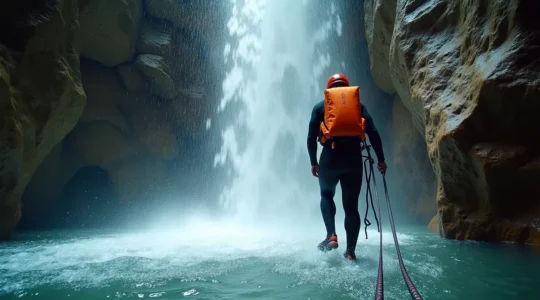
How to Start Canyoning Safely If You Aren’t a Strong Swimmer ?
The primary barrier to canyoning for many is a fear of water, but technical skill and an understanding of physics are far more critical for safety than swimming ability. Specialized gear, like a 5-7mm canyoning wetsuit, provides significant buoyancy, acting…
Read more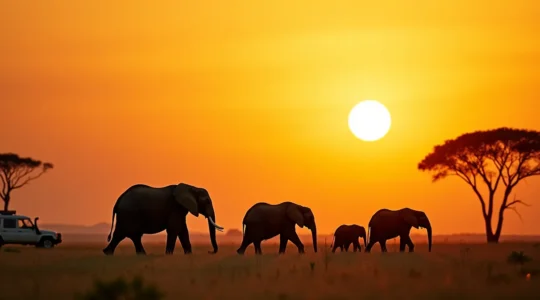
Safari or Sanctuary: Which Wildlife Experience Actually Helps Conservation?
Contrary to popular belief, choosing an ethical wildlife trip isn’t about simply picking a ‘sanctuary’ over a ‘safari’—it’s about becoming a ‘conservation auditor’ who understands the system. Your physical presence has an ecological footprint, including disease risks for animals and…
Read more
How to Train for Alpine Peaks While Living at Sea Level
Training for the alpine isn’t about mimicking altitude; it’s about forging a body so metabolically efficient and a mind so disciplined that you can withstand the inevitable physiological breakdown above the treeline. Your success hinges on building an aerobic base…
Read more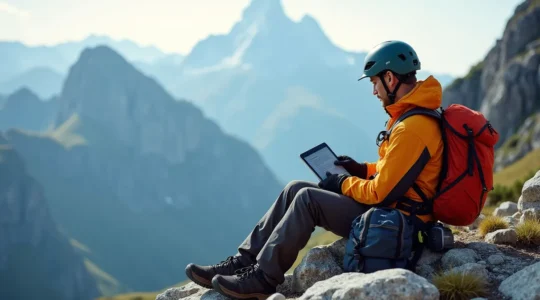
How to Prepare for Extreme Sports Travel Without Voiding Your Insurance?
Standard travel insurance is intentionally designed to deny claims for anything deemed an “adventure,” treating your policy as a financial landmine. Most policies contain “hazardous activity” exclusions that void coverage for common adventure sports. The only effective countermeasure is to…
Read more
How to Visit Historic Monuments Without the Crowds: An Insider’s Guide to Deeper Connection
In summary: The biggest frustration at historic sites isn’t just the crowds, but the superficial experience they create. The solution is to shift your mindset from a ‘tourist’ to a ‘temporary custodian,’ focusing on strategic timing, narrative control, and meaningful…
Read more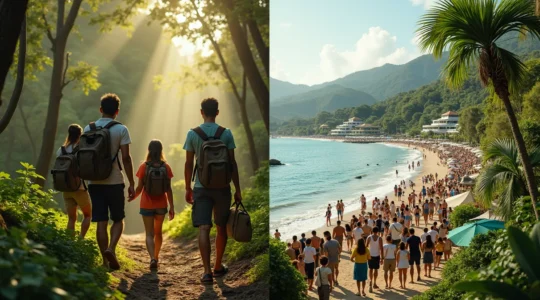
How to Distinguish Genuine Eco-Tourism from Greenwashing Marketing ?
True sustainable travel requires you to act like an auditor, not just a tourist, by critically demanding verifiable proof for every environmental claim. The credibility of “eco” certifications varies wildly; many are little more than paid-for logos that lack rigorous,…
Read more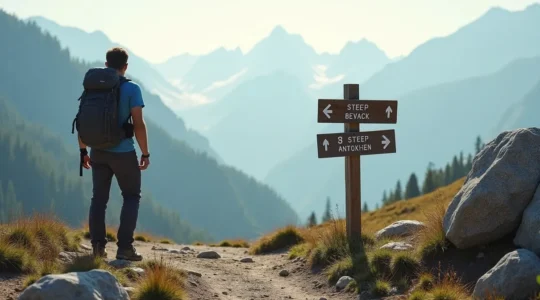
How to Realistically Choose a Hike That Matches Your Fitness Level
Picking the wrong trail isn’t just disappointing—it’s a primary safety risk for new hikers. The true difficulty of a trail lies in its elevation gain, especially the descent, not just its total distance. Your choice of footwear and pack weight…
Read more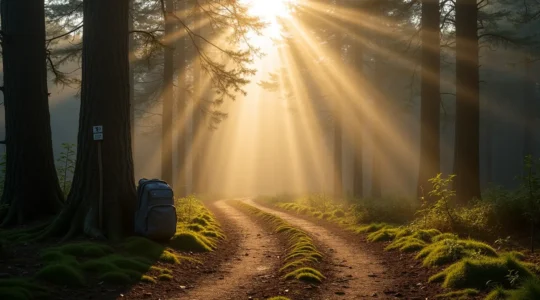
How to Plan Nature Excursions That Reset Your Circadian Rhythm ?
The constant fatigue and poor sleep of urban life are not a personal failing, but a biological response to an environment that has disconnected you from natural cycles. Intentional nature excursions, designed as environmental therapy, are the most effective way…
Read more