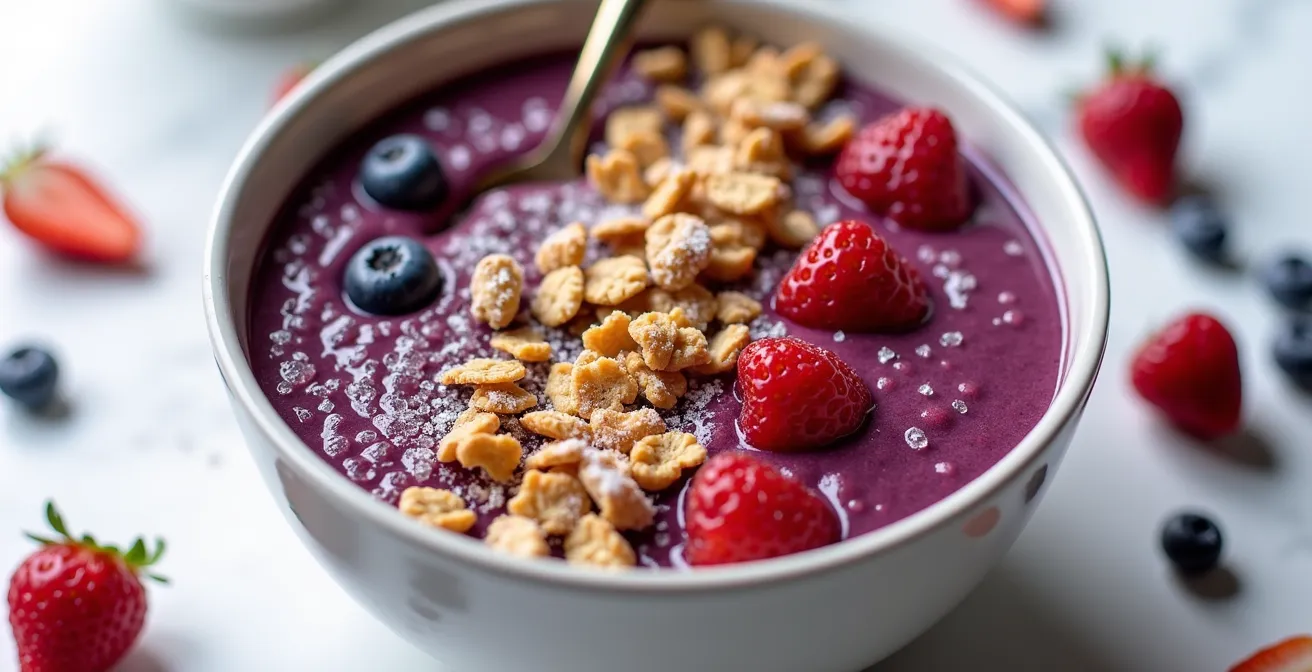
Acai bowls are marketed as the pinnacle of health, but most commercial versions are biochemically closer to a dessert than a nutritious meal.
- They often contain massive amounts of sugar from sweetened purees, fruit juices, and sugary toppings, creating a significant glycemic load.
- The powerful “health halo” of antioxidants distracts consumers from the negative metabolic impact of this sugar rush.
Recommendation: To get the benefits without the crash, build your own bowl using unsweetened acai, a quality protein source, healthy fats, and low-sugar fruits.
The health food industry has a knack for creating heroes. In the last decade, few have worn the cape as proudly as the acai bowl. Promoted as a vibrant, antioxidant-packed superfood, it has become the default choice for health-conscious consumers. But beneath the carefully arranged fruit and granola lies a metabolic truth that is far less appealing. As one analysis bluntly puts it, “The tiny acai berry is one of the only fruits on the planet that’s naturally sugar free. Yet when this happy, healthy little berry met the American market, it launched a thousand sugar bombs.”
This article moves beyond the marketing hype. We will not be debating whether antioxidants are good for you—they are. Instead, we will adopt the skeptical, evidence-based lens of a nutritionist to dissect the acai bowl as a product. We’ll explore the health halo effect, a psychological phenomenon where a single positive attribute makes us ignore a dozen negatives. The central argument is this: the perceived benefits of acai are often used as a Trojan horse to deliver a payload of sugar that can sabotage your health goals.
We will deconstruct the components of a typical bowl, analyze its real metabolic impact, and then, most importantly, show you how to build a version that lives up to the health promises. It’s time to separate the nutritional facts from the marketing fiction.
To navigate this topic methodically, we will break down the myths and realities of so-called “superfoods.” This guide examines everything from the function of antioxidants to the practical ways of building a genuinely healthy, muscle-supporting meal.
Summary: Unmasking the Truth About Acai Bowls and Superfoods
- How Antioxidants Actually Work to Fight Cellular Aging ?
- Optimizing Your Smoothie: How to Mask the Taste of Spirulina ?
- Blueberries vs Goji Berries: Which Is the Superior Superfood ?
- The Danger of Concentrated Superfood Supplements on Your Medication
- When to Take Maca Root for Maximum Energy Without Insomnia ?
- Pre-Workout vs Post-Workout: When Does Your Body Need Carbs Most ?
- Optimizing VO2 Max: The Single Best Predictor of Longevity ?
- How to Build Muscle on a Vegan Diet Without Supplements ?
How Antioxidants Actually Work to Fight Cellular Aging ?
Antioxidants are molecules that fight free radicals, which are unstable compounds that can cause damage to cells, contributing to aging and diseases. This process, known as oxidative stress, is a key focus in anti-aging science. Superfoods like acai, blueberries, and spinach are lauded for their high antioxidant content, which helps neutralize these damaging free radicals. In theory, a diet rich in these compounds provides your body with the defensive tools it needs to protect cellular integrity and promote long-term health. This is the scientific basis for the entire superfood movement.
However, this is where the health halo effect becomes dangerous. The presence of antioxidants in a food does not grant it a free pass on all other nutritional metrics. In the case of commercial acai bowls, the antioxidant benefit is used to mask a significant metabolic downside: sugar. The acai puree is often pre-sweetened, blended with sugary apple juice or banana, and then piled high with honey, granola, and more fruit. The result is a meal that can deliver a shocking sugar load. Some bowls from popular chains contain up to 65 grams of sugar, an amount that far exceeds the daily recommended limit for many adults.
This massive sugar intake triggers a sharp spike in blood glucose and a subsequent surge of insulin. While you are consuming antioxidants, you are also subjecting your body to a metabolic rollercoaster that, over time, can lead to insulin resistance, inflammation, and weight gain—the very things you were trying to avoid by choosing a “healthy” meal. The antioxidant benefit is real, but it’s nullified when delivered in a sugar Trojan horse.
Ultimately, the question is not whether antioxidants work, but whether their delivery vehicle is supporting or sabotaging your overall health.
Optimizing Your Smoothie: How to Mask the Taste of Spirulina ?
Moving from deconstruction to reconstruction, the goal becomes building a genuinely nutritious meal, not just a photogenic one. The challenge with many potent superfoods like spirulina or kale is their strong, often bitter taste. Masking these flavors without resorting to sugar is the key to creating a truly optimized smoothie. Instead of using sugary fruit juices or honey, the strategy is to leverage healthy fats and naturally low-sugar, creamy ingredients.
For instance, a half-avocado or a tablespoon of almond butter can add a rich, creamy texture that smooths out the harsh notes of greens. A small portion of a low-glycemic fruit, like a handful of raspberries or blackberries, can provide a hint of sweetness without overwhelming your system with fructose. Spices like cinnamon or ginger also work wonders, adding complexity and flavor that distracts from the “green” taste while offering their own anti-inflammatory benefits. This approach transforms a drink from a chore into a treat, without the metabolic cost.
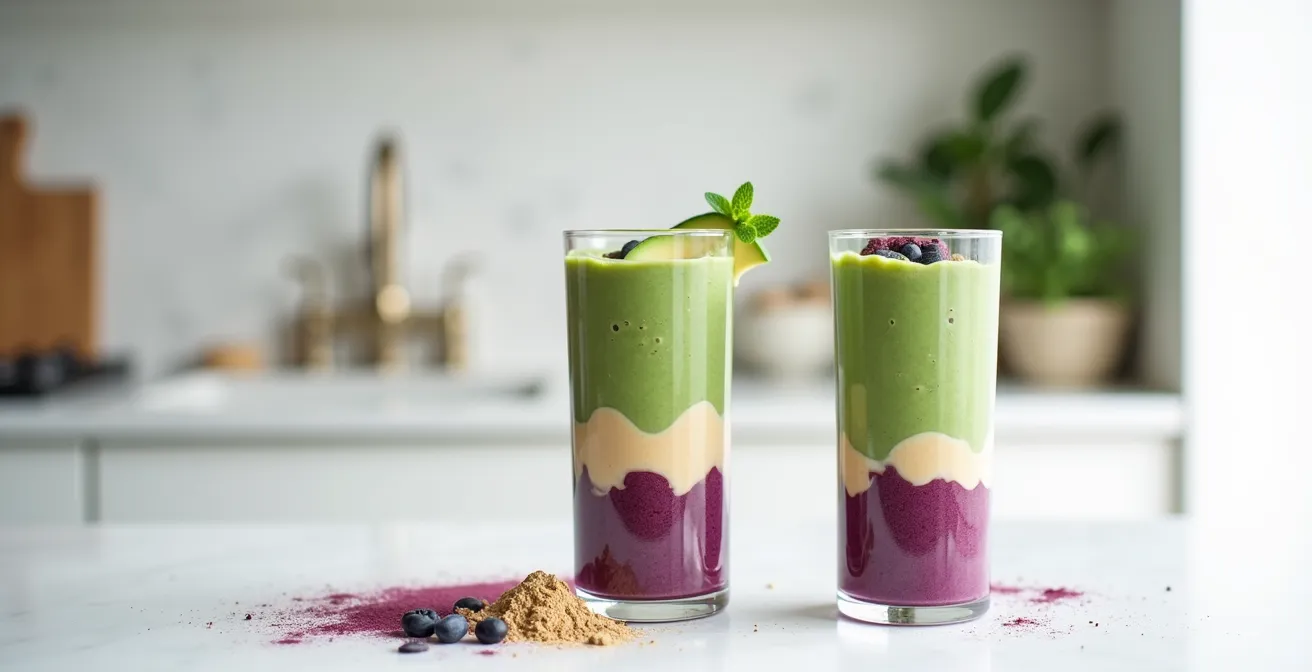
The visual of a layered smoothie, where vibrant green spirulina blends into a rich, creamy base, demonstrates this principle perfectly. You can see the integration of different textures and nutrients, creating a balanced meal rather than a homogenous sugar syrup. The goal is to build a smoothie with a balanced macronutrient profile: high-quality protein, healthy fats, and fiber-rich carbohydrates from vegetables and low-sugar fruits. This is the antidote to the sugar-laden acai bowl.
This method ensures you get all the benefits of potent superfoods like spirulina without compromising your blood sugar stability.
Blueberries vs Goji Berries: Which Is the Superior Superfood ?
The term “superfood” is a marketing invention, not a scientific classification. This often leads to a false hierarchy, pitting one nutrient-dense food against another, like blueberries versus goji berries. Both are nutritional powerhouses rich in antioxidants, vitamins, and fiber. Blueberries are celebrated for their high levels of anthocyanins, which are linked to brain health, while goji berries are prized in traditional medicine for their unique polysaccharides and carotenoids. The debate over which is “superior” misses the point: dietary diversity is more important than crowning a single champion.
The more relevant comparison is between these whole fruits and the processed purees found in commercial bowls. The raw acai berry itself is a nutritional winner, being exceptionally low in sugar and high in healthy fats. The problem is never the fruit, but its commercialized form. A look at the data reveals the scale of this distortion. Pure acai contains very little sugar, but the bowls served in shops are often more sugary than other fruits we perceive as sweet.
This table clearly shows that pure acai is not the culprit in the high-sugar content of acai bowls. The blame lies with added sweeteners and high-sugar mixers, a point underscored by brands actively trying to solve the problem.
| Berry Type | Sugar per 100g | Antioxidant Level |
|---|---|---|
| Acai (pure) | 2g | Very High |
| Grapes | 16g | Moderate |
| Blueberries | 10g | High |
| Goji Berries | 13g | High |
Case Study: Playa Bowls’ Sugar Reduction Strategy
Some companies are actively addressing this issue. For example, Playa Bowls reports that they never blend their acai base with banana or apple juice, two common sources of hidden sugar. They also focus on sourcing high-quality acai that doesn’t need to be stored for over a year, a practice that can degrade quality and lead to the use of more additives. This demonstrates that it’s possible for commercial outlets to offer a healthier product, placing the responsibility on the consumer to ask the right questions and choose wisely.
Instead of chasing the “best” superfood, focus on consuming a variety of whole, unprocessed fruits and questioning the ingredients in pre-made products.
The Danger of Concentrated Superfood Supplements on Your Medication
The “superfood” trend extends beyond bowls and into highly concentrated powders, pills, and supplements. While these products promise a convenient dose of nutrients, they can carry risks, especially for individuals on medication. For example, concentrated green tea extract can affect liver function, and high-dose grapefruit supplements can interfere with the metabolism of numerous drugs, including statins and blood pressure medications. The fundamental issue is that a concentrated extract is not the same as the whole food; it lacks the synergistic balance of fiber and other compounds that modulate its absorption and effects.
However, the most immediate and widespread danger for the general population isn’t supplement interaction, but the sheer glycemic load of so-called health foods. The sugar content in many commercial acai bowls is not just high; it’s extreme. It’s not uncommon to find that commercial bowls can pack 50-100 grams of sugar into a single serving. This quantity, often consumed in the morning, creates a severe metabolic shock. The body is flooded with glucose, forcing the pancreas to work overtime to produce insulin.
This isn’t a benign indulgence. As experts from the Harvard T.H. Chan School of Public Health warn, this type of sugar intake has serious, well-documented consequences. Dr. Frank Hu states, “Excess sugar’s impact on obesity and diabetes is well documented, but one area that may surprise many men is how their taste for sugar can have a serious impact on their heart health.” This regular assault on your metabolic system is a direct pathway to chronic conditions, completely negating any benefits from the “superfoods” included.
The danger is not in the acai berry itself, but in its transformation into a high-sugar, highly processed product that masquerades as health food.
When to Take Maca Root for Maximum Energy Without Insomnia ?
Timing is a critical factor in nutrition, especially when consuming foods or supplements designed to influence energy levels. Maca root, a Peruvian adaptogen, is often taken for its purported benefits on energy and stamina. Because it can have a stimulating effect, it’s generally recommended to consume it in the morning or early afternoon to avoid interference with sleep. This principle of nutrient timing, however, applies far more significantly to the primary source of energy in our diet: carbohydrates, and by extension, sugar.
Consuming a high-sugar acai bowl for breakfast is a classic example of poor nutrient timing. While the initial sugar rush provides a quick burst of “energy,” it’s a volatile and inefficient source. The rapid spike in blood sugar is inevitably followed by a “crash,” as insulin works to clear the glucose from the bloodstream. This often leaves you feeling more tired and lethargic by mid-morning than you were before the meal, leading to cravings for more sugar or caffeine to get through the day. This is the opposite of the sustained energy you seek from a healthy breakfast.
True, lasting energy comes from a meal that provides a slow, steady release of glucose. This is achieved by combining complex carbohydrates with protein and healthy fats. These macronutrients slow down digestion and absorption, preventing the dramatic blood sugar spikes and crashes associated with high-sugar meals. An adaptogen like maca can be a useful addition to a well-formulated routine, but it cannot compensate for the metabolic chaos caused by a breakfast that is functionally a dessert. The real key to maximum energy is blood sugar stability, not a quick sugar fix.
Before adding supplements like maca, the first priority should be to remove the nutrient-void, energy-draining sugar bombs from your diet.
Pre-Workout vs Post-Workout: When Does Your Body Need Carbs Most ?
In the context of fitness, carbohydrates are not the enemy; they are a vital fuel source. The debate centers on timing: when does the body need them most? For a pre-workout meal, the goal is to provide sustained energy. A meal high in simple sugars, like a typical acai bowl, is a poor choice. It can lead to reactive hypoglycemia (the “crash”) mid-workout, sapping your strength and endurance precisely when you need it most. A small portion of complex carbs an hour or two before exercise is far more effective.
Post-workout, however, the body’s needs change dramatically. After intense exercise, your muscle glycogen stores are depleted. This is the one time when a rapid influx of carbohydrates is not only acceptable but beneficial. Carbs consumed post-workout help to quickly replenish these glycogen stores and the accompanying insulin spike can aid in muscle repair by driving amino acids into muscle cells. This is where a *modified* acai bowl can find its place. But even here, the commercial version is a nutritional liability, often exceeding 600 calories and 75 grams of sugar, with very little protein.
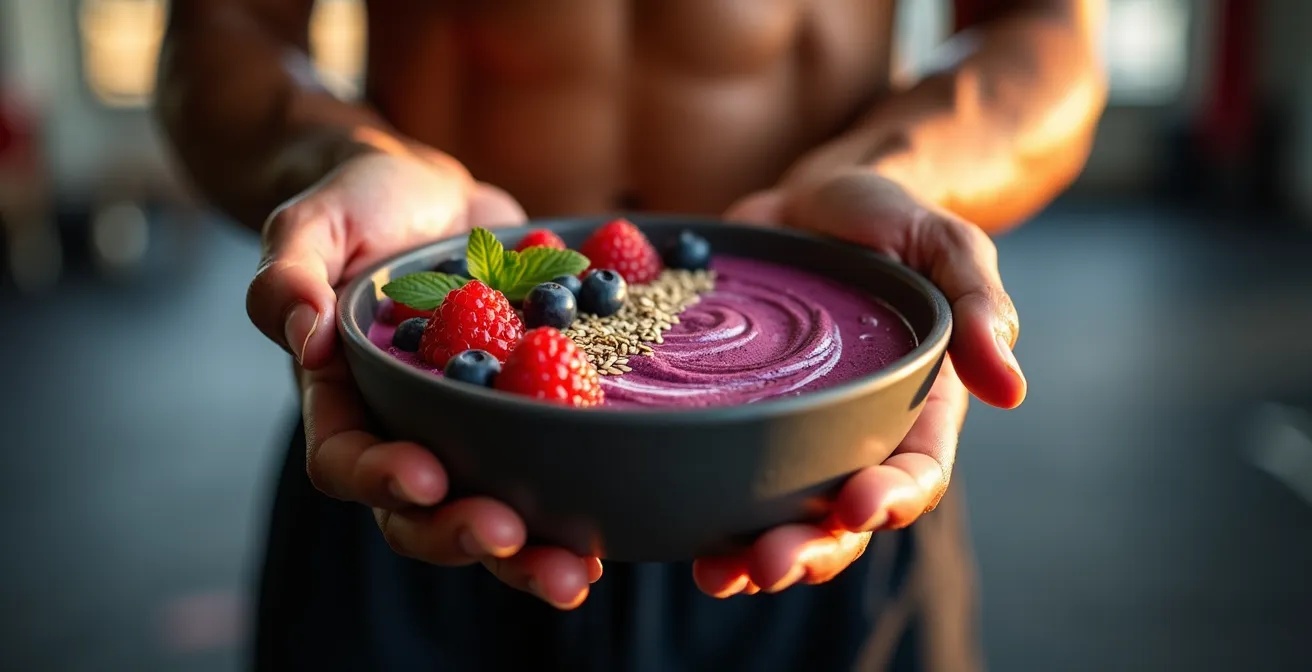
The ideal post-workout bowl must be re-engineered for recovery. This means blending unsweetened acai with a scoop of high-quality protein powder (whey, casein, or a plant-based alternative). This combination provides the necessary carbs for glycogen replenishment and the essential amino acids for muscle protein synthesis. Toppings should be functional—a handful of berries for antioxidants, a sprinkle of hemp seeds for protein and healthy fats—not decorative sugar bombs like chocolate chips or sweetened coconut flakes.
By transforming the acai bowl from a sugar-heavy snack into a protein-centric recovery meal, you align its consumption with your specific physiological needs.
Optimizing VO2 Max: The Single Best Predictor of Longevity ?
Cardiorespiratory fitness, often measured by VO2 max, is increasingly recognized as one of the most powerful predictors of long-term health and longevity. VO2 max represents your body’s maximum ability to utilize oxygen during intense exercise, and a higher value is strongly correlated with a lower risk of all-cause mortality. While regular cardiovascular exercise is the primary way to improve this metric, your diet plays a crucial supporting role by influencing inflammation, body weight, and overall metabolic health.
This is where the promise of “health foods” clashes with reality. A diet that consistently destabilizes your blood sugar is fundamentally at odds with optimizing longevity. The chronic inflammation and oxidative stress driven by high sugar intake directly undermine the benefits of your exercise routine. You cannot out-train a bad diet, and consuming a daily acai bowl loaded with sugar is a step in the wrong direction, regardless of its antioxidant content. The negative metabolic effects far outweigh the marginal benefits.
The connection between sugar and poor health outcomes linked to longevity is not theoretical. As Dr. Frank Hu of the Harvard School of Public Health explains, the consequences are direct and severe: ” The effects of added sugar intake – higher blood pressure, inflammation, weight gain, diabetes, and fatty liver disease – are all linked to an increased risk for heart attack and stroke.” These conditions are the antithesis of a long, healthy life. Optimizing a metric like VO2 max requires a holistic approach where both exercise and nutrition work in harmony, not against each other.
True health optimization involves eliminating sources of chronic inflammation, and the first step for many is to see the sugary “superfood” bowl for what it really is.
Key Takeaways
- Most commercial acai bowls are “health foods” in name only, delivering a massive sugar load that spikes blood sugar.
- The “health halo” of antioxidants is used as a marketing tool to mask the negative metabolic impact of sweetened purees and sugary toppings.
- True nutritional value comes from building your own meals with unsweetened ingredients, balanced macronutrients (protein, fat, fiber), and whole foods.
How to Build Muscle on a Vegan Diet Without Supplements ?
Building muscle on a vegan diet is entirely achievable, but it requires a strategic focus on protein intake. The challenge is to get a sufficient amount of complete protein—containing all nine essential amino acids—from plant-based sources. This is where redesigning the acai bowl from a carb-heavy snack into a protein-packed meal becomes a powerful tool for vegan athletes and fitness enthusiasts. By moving beyond the standard fruit-and-granola template, the bowl can become a primary vehicle for post-workout recovery and muscle synthesis.
The key is to build a robust protein base. Instead of blending acai with just water or sugary juice, use a protein-rich liquid like soy milk or a high-protein plant-based milk. Better yet, blend the unsweetened acai puree directly with a serving of silken tofu or a plant-based Greek yogurt alternative. These ingredients create a creamy, thick base that is loaded with protein, providing the essential building blocks for muscle repair. From there, every addition should serve a purpose.
Nut butters add both protein and healthy fats for satiety. Seeds like hemp, chia, and flax provide complete proteins, fiber, and anti-inflammatory omega-3s. Even the choice of fruit can be optimized; instead of high-sugar bananas or mangoes, opt for lower-sugar, high-fiber berries. This approach transforms the acai bowl into a functional, muscle-building meal that aligns perfectly with the demands of a vegan lifestyle.
Action Plan: Building a High-Protein Vegan Acai Bowl
- Start with a Protein-Rich Base: Blend 100g of unsweetened acai puree with 1/2 cup of a Greek yogurt alternative or 150g of silken tofu instead of juice or water.
- Incorporate Healthy Fats and Protein: Mix in two tablespoons of nut butter (almond, peanut) or a generous sprinkle of hemp seeds for a complete protein profile.
- Add a Protein Boost (Optional but Recommended): For maximum muscle support, blend in a scoop of your favorite unflavored or vanilla plant-based protein powder.
- Choose Toppings Wisely: Top with a tablespoon of chia seeds for fiber and omega-3s, and a small handful of low-sugar berries, not sugary granola or honey.
- Balance with Fiber: Ensure your total fruit portion, including the acai, remains around one cup to control the overall sugar and maximize the fiber-to-sugar ratio.
By following these principles, you can enjoy all the flavor and antioxidant benefits of an acai bowl while ensuring it actively supports your journey to build muscle.